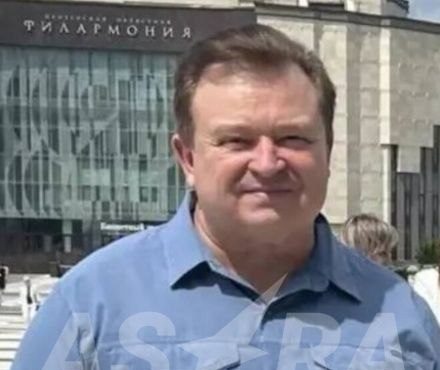
Evgeniy Kuzmin, who works in the occupied part of the Kherson region as a volunteer and is a “candidate for deputy” in the territory of the Ukrainian region seized by the Russian Federation, told ASTRA how people were evacuated in Oleshki, Kardashinka and Gola Pristan in the first days of the flood after the destruction of the Kakhovka hydroelectric station, while there the rest of the volunteers were not allowed through.


— We didn’t work on the first day of the flood, because the situation was not critical at all, there were small floods, people had to get out there themselves, they treated it negligently, let’s call it that, and already on the second day, when they realized that the situation was critical, then yes, there were no evacuation buses, no Ministry of Emergency Situations, in the required quantity, we took everything out ourselves, on our own, the police and the heads of settlements and districts helped. We tried all this, and on the third day a full-fledged evacuation began, as it should have been, and so it is still going on.From the second day, even to the third, when no one understood that the water could rise so quickly, people who thought that everything would be fine, they were forced to move to the second floor, to the roofs, and on the first day [of our work], when we in the evening were already walking back, people were shouting to us, begging, begging us to take them, but, unfortunately, darkness was already setting in and we could not do it. There were a lot of people left on the roofs, really a lot.
— Were these people in critical condition?
– Yes, these were people on the roofs and in the attics of houses.
— Why couldn’t people be picked up in the evening because there was a curfew?

— It’s not just about the curfew, you see. We have a lot of volunteers, [emergency workers] from the Emergency Situations Ministry, and they’re all outsiders. There’s no connection there whatsoever, they can’t navigate the streets because they don’t know them, all the signs are submerged, they’re not visible. There are no landmarks, and on top of that, they have to work in the dark with flashlights. Every day, we were being shot at there. Several times a day. But in such a situation, even our military would be anxious, not knowing who’s out there, and it was the same from the Ukrainian side. So, it’s not safe. Most likely, many people [are dead]. There were cases when we arrived at a [house], and, bluntly speaking, there were pensioners there, and when we arrived, one of them said, “My grandmother was there, and now I don’t know where she is. Now I’m alone.” People fall asleep, fall into the water, like that. The situation is such that, you see, bodies don’t immediately float up, it takes a certain amount of time, depending on various factors, and the current is very strong now, on the fourth day, when the water began to recede, there was a very strong current on the main streets that run parallel to the Dnieper. And maybe people were washed away and carried further. Right now, it’s a “pig in a poke” for us. [referring to the situation with the dead]. We’re discussing everything at the Operations Headquarters, but it will all start tomorrow, I think we’ll have a better understanding [of the number of dead]. There are floating bodies, I personally saw them, the ones we personally saw – there were three. But right now, it’s very difficult to estimate how many there actually are.

— You say people were screaming and asking for help, but there was no opportunity to go back. Volunteers, maybe, couldn’t do anything, but weren’t the emergency services of the Ministry of Emergency Situations, which are specifically designed to work in emergency situations, including at night, couldn’t they go back there to save those people who were screaming?
— Well, first of all, it’s forbidden for us. No one told us about the curfew, that’s a fact, I’m telling you, the Emergency Situations Ministry personnel are also not locals, they came from Crimea, locals were also there, but they were not born there, they also don’t know, lack of communication and internet. It’s a serious problem. But the biggest problem is because of our military, yes. I mean, there were a lot, as I said, of boats coming out from that side, SRG and the like. There’s a very high risk of getting under fire.
— What about SRG? They were involved in rescuing, they didn’t perform any other actions, right?
— No, none of them took any actions, but the fact that no one knows, no one confirmed, but the military informed us to be careful around Kardashinka and beyond.
— We spoke with the coordinator of the volunteer group Yaroslav Vasiliev, he said they were collecting boats and aid, but neither volunteers nor boats were allowed through the checkpoint.
— I don’t know, our guys worked in Oleshki and Kardashinka.
— Am I right in understanding that only those with Russian passports and military passes were allowed through?
— No, Russian passports, I can say, with all the volunteers I worked with, there were no problems moving around the region, but I’m only talking about Oleshki and Golaya Pristan, we had no problems in this area, on the contrary, the military helped. We had only 10-11 boats working from volunteers, we had no problems. I heard someone somewhere said they weren’t let through, but we had no problems.
— Don’t you think it’s because you had passes?
— We didn’t have passes, nobody did. They check passports at checkpoints, but here everyone, 90 percent, has Ukrainian passports, they moved around freely.
But now the number of people we evacuate is minimal. When we arrived for evacuation, we asked if they would go, they said – to Kherson? And we tell them – what Kherson, we’re here. They say, in that case no. And we only took those who wanted to go. Yesterday we took 10 people from Kardashinka, three of them were children. The rest refused. “We don’t want to”, they say.
— You said there were many boats from the right bank rescuing people from the left, and you called them SRG. But they were still rescuing people, right?
— Yes, they told us that people in civilian clothes came, one or two boats, apparently without light, went at their own risk. They approached, and these people were taken there [to the right bank].
— Do you think they don’t have the right to do this, Ukrainian authorities or volunteers, I don’t know who it was, rescuing their citizens. According to your logic, is this illegal?
— Well, understand, if you look at it from the point of view of legislation and the Constitution of the Russian Federation – it’s the territory of the Russian Federation. Therefore, the actions of any organizations without approval are illegal, let’s call it that.
If we’re talking about humanity, then, of course, it doesn’t matter where he went – to the left bank, then to the left. To the right, then to the right. I don’t ask such questions, if they have the opportunity and they came with peaceful intentions to take people, then of course, it’s good, let them take them, so it’s normal.
— And how, from the point of view of the constitution, do you say it’s the RF, if there’s an article banning war (meaning Article 353 of the RF Criminal Code). That is, Russian troops entered by military means, captured cities, and in the captured cities conducted a “referendum.” Do you think this is legal?
— I think it is.
— So, suppose if now armed forces enter the Belgorod region, which we partly observe, capture territories and conduct a “referendum,” about joining another country, and supposedly 90 percent will be “for,” then this will be legal, in your opinion?
— Look, honestly, I’m not ready to answer political topics and questions, because I have other tasks here.
— But you are a “candidate for deputy of the Kherson region,” it says so.
— Yes, but now I answer questions about evacuation and liquidation of consequences. This comes first for me. Therefore, I am not ready to answer these questions now. But my position on what is happening now is that I fully support the official position of the Russian Federation.
Author: Anastasia Chumakova