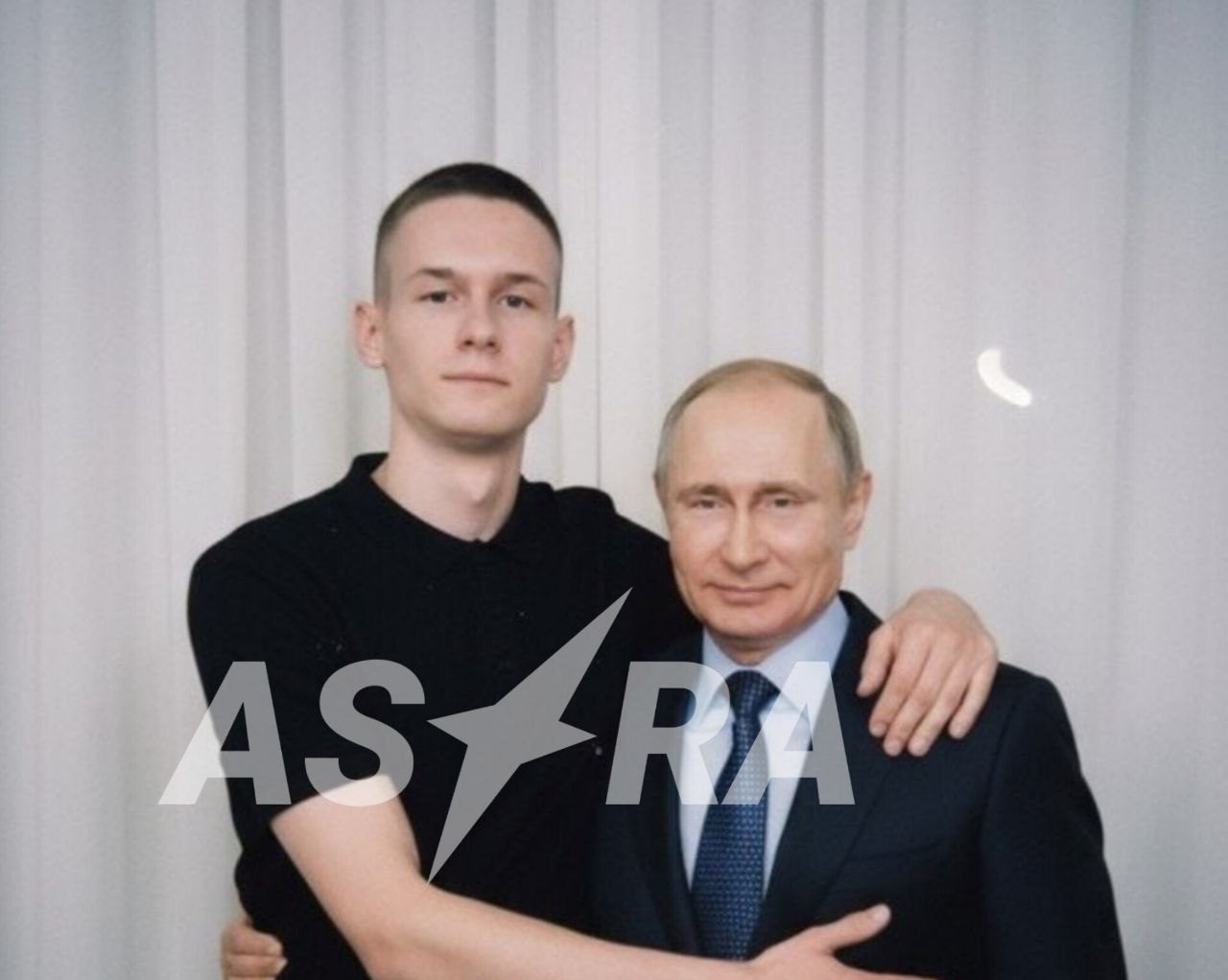
Yegor Budantsev, an 18‑year‑old resident of Lyubertsy, called himself a patriot — inspired by the exploits of the heroes of the Great Patriotic War, he decided to volunteer for “Bars” in the Moscow region after school. However, the young man was rejected because he failed the psychoneurological tests, even though he was handed a summons as he left the military enlistment office on Yablochkova Street in Moscow; the summons listed an unknown address — no one from the Budantsev family had ever lived there. Yegor’s aunt, Victoria, told ASTRA about this.

It is likely that the summons should have been given to someone with the same name as Yegor, as there was no information about it on the State Services portal or in the summons register. At the same time, Yegor’s family tried to dissuade him even from doing compulsory military service while the war in Ukraine was ongoing, but the young man insisted that he needed to “pay his debt to the Motherland,” although he was against signing a contract.
“I had a huge argument with him; I tried to explain the situation to him, but he’s an ‘adult,’ he’s 18 years old. I advised his mother to take him to a psychiatrist, he has the development of a 14‑year‑old boy who has read books about the Great Patriotic War and listened to too many songs.” “His whole room is covered in Russian flags, but he doesn’t understand reality; he has the critical thinking of a child,” Victoria says.
However, the young man, hiding from his relatives, got ready and left for the military enlistment office in response to a summons on October 13. By October 14, he was already in Boguchar in the Voronezh region, at military unit 91727; they didn’t give him a phone, and half of his belongings were missing.
It turned out that all this time, Yegor and his fellow soldiers had been under pressure from the officers — they weren’t allowed to drink, they were woken up at 4:00 a.m. and made to stand on the parade ground in their summer uniforms, and they were threatened with the pit (although there is no proof of its existence).
“They have this pit, and in it there’s a cage, and they put servicemen in there in just their underwear, where they sit for days without water or food, and rats run around there. That’s all — the boys, they’ve started to hear.” “And then the crazy propaganda campaign began,” Victoria recounts, citing the conscripts.
The propaganda was carried out by the contract soldier Vladimir Korolev. Yegor was taken to the laundry drying room, where he was told that “if you don’t sign the contract, you’ll be the first to go to ‘zero’ with a shovel in your hands tomorrow, because you’re a deserter and not a Russian.” As a result, on October 16, Egor signed a contract while being recorded on video by Korolev (the response from the Russian Ministry of Defense notes that now military personnel record videos stating that they are allegedly voluntarily signing contracts).
The young man reported that, in addition to him, 15 other people signed the contract. On November 1, Budantsev signed a report refusing to sign the contract. This is how Egor met 18‑year‑old serviceman Igor Nasonov — the latter was also forced to sign the contract. By this time, the conscripts had managed to contact their relatives, who began filing complaints and lawsuits.
Yegor’s mother, Maria, travelled from the Moscow region to Boguchar; she saw her son on November, 15. On November, 19, Yegor was taken to the Pogonovo training ground; there he fell ill, went to the medical unit, where his coat was stolen: it contained his passport (although the document was supposed to be at the unit), his phone, and his bank card. Igor Nosonov was also robbed, but ASTRA was unable to contact his relatives.
Yegor is now being threatened with being sent to Rogovo, Luhansk region of Ukraine, to be “stormed.” At the same time, Korolev threatens Egor to “make a mess” because of his complaints to relatives about the actions of the officers in the unit.
On November 20, Victoria went to a meeting with the office of the Ombudsman of the Russian Federation, Yana Lantratova, at the Human Rights House in Moscow. She even appeared in one of the photos published by Lantratova in “Max.” On November 22, Victoria spoke with the deputy human rights commissioner in the Voronezh region, but this has not yielded any results yet.
The Russian Ministry of Defense responded to the complaints by saying that they had “checked” the military unit and found no violations; however, the document states that the department “checked” military unit 34670 and found that “the contracts were signed voluntarily,” even though Egor and Igor serve in military unit 91727.