Military of the Armed Forces of Ukraine “Skhidny” about eight years of partisanship under the Russian occupation and New Year’s combat duty in the Kursk region.

The word “skhidny” is translated from Ukrainian as “eastern”.
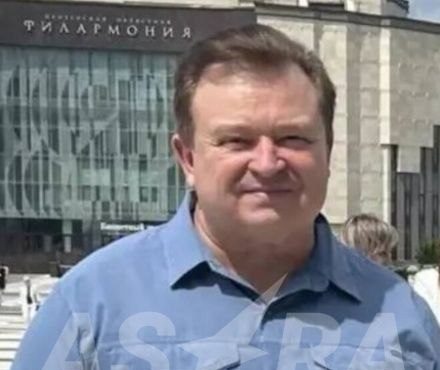
Artyom Karyakin, 27 years old, has lived in eastern Ukraine all his life. He was 16 years old when Russian troops appeared in Stakhanov. From that day on, in his own words, Karyakin stopped being just a “schoolboy from the east of Ukraine” and became a partisan and spotter of the Armed Forces of Ukraine with the call sign “Skhidny”.
Karyakin left his hometown only on the eve of a full-scale war at the end of 2021, having previously buried both of his parents. During the war, unknown people will send him a photo of the Karyakins’ family grave with a Russian flag and a broken monument to his grandfather. On New Year’s Eve, ASTRA called Karyakin to record his story, from the first questions about relations between Russians and Ukrainians to the underground in the “LPR” and the New Year in the part of the Kursk region occupied by the Armed Forces of Ukraine.


On the night of 31 to 1, we will definitely be on duty in the Kursk region. This is symbolic for me, because it’s been a long time since I’ve celebrated New Year’s Eve on a foreign territory. In Stakhanov, it was like our own territory, but under the Russian flag. You can’t feel a city completely as your own when it’s occupied. Russia not only steals land, it also mentally destroys the feeling of home.
We were sent to the Kursk region on August 24, 2024. Even when I was driving there, I kept thinking about how the locals would react to us, how we would behave there. After all, we do not conduct wars of conquest, we do not need this Sudzha. But people who can think logically probably understand that this section of Russian territory is extremely necessary for us so far.
At war, the New Year is also celebrated. We’ll sit for an hour, and then we’ll go back to our tasks. But that’s if you’re lucky. I do not know what the Russians have in mind. Given that they are about 4 kilometers away from Sudzha itself, and given the pace at which Koreans run, everything is possible. And it is quite possible that we will celebrate the New Year there in battles.
New Year’s Eve at the front is usually: a basement, garlands are mandatory of cource, a cat, a couple of dogs, a bunch of stew and endless tea. People try to somehow create the atmosphere of home without being at home. For me, this is no longer a holiday. Because on the night of 2020, my mother was dying.
Childhood. “My father could not answer the question of why the Russians do not support us”

I was born in 1997 in the town of Stakhanov, Luhansk region, not far from Luhansk itself, a 40-minute drive away. In Ukrainian, the city is already called Kadiyivka, but even the pro-Ukrainian residents who stayed there call it Stakhanov. Few people are used to the new name.
My family was ordinary. My mother was a postman, my father worked in a mine, but not as a miner, but as a loader driver. I lived the most ordinary life: in the summer to the Crimea by the sea, on weekends to football in Donetsk. I went to school.
I’ve always loved watching football and biathlon since I was a kid. And I always supported the Ukrainians, that is, the national team of Ukraine. Because this is my country, it makes sense. At some point, I began to notice that everyone around me was cheering a little more for Russia. Especially in 2008, when the European Championship was held, the Russians reached the semifinals there. I understood that we had friends in Russia, relatives. But for some reason, the Russians didn’t support our national team as much as the Ukrainians supported theirs. Why? After all, they didn’t even show the Ukrainian Championship on TV. I didn’t understand why we supported the so-called brothers and they didn’t support us. This contrast resulted in kind of negative impression on the situation.
I had a lot of arguments with my father about this. My dad didn’t understand why I didn’t support Russian clubs in European competitions. I didn’t understand why he supported them. My father explained his position: “We have always been one country, and now I am rooting for both of them.” But when asked why the Russians don’t support us, he couldn’t answer. Over time, my father understood my position. Or he just didn’t want to quarrel with me and therefore stopped openly supporting Russian teams.
Another question that has been bothering me since I was a child: why, if we were born in Ukraine, we live on Ukrainian territory, do we have Russian flags hanging everywhere here? All our drivers hung both the Ukrainian flag and the Russian flag on the windshield, and this seemed to be the norm. But I was in Russia, I went to Kazan and to Moscow. I didn’t see any Ukrainian flags on buses there. I didn’t see any Ukrainian flags in Rostov. Although there are many Ukrainians there. After that, I became more interested in Ukrainian history and patriotism.
And somewhere in the year, probably 2012, pro-Ukrainian activism appeared in my life. It all started with the “March of Heroes” in Stakhanov on the 70th anniversary of the UPA, the Ukrainian Insurgent Army [an underground military organization that advocated the liberation of Ukrainians from German and Soviet occupation]. In principle, there were no such marches in the Luhansk region at that time. It was almost the only one. There were about 15 of us with red and black flags. I was still very young at the time, I was 15 years old.
This march ended about ten minutes later with a clash with supporters of the then current government — the “Party of Regions” – with supporters of the Communist Party.
The brawl involved Don Cossacks, who actually appeared in Stakhanov in the early noughties and were brought to us from the Russian Federation. It’s just that at that time we still didn’t think about who they were and why they were in our city. Even then, the Don Cossacks were such a power cell in our country. In those years, the Don Cossacks did not betray their pro-Russian views and ideology, but at the “March of Heroes” they took away our flags not only red and black [UPA flags], but also the flags of Ukraine.
After that, the world in my head probably turned upside down. I realized that for some reason I can’t calmly walk with the flag of Ukraine or with the flag of the UPA in my Ukrainian city. In fact, it was difficult to be 100% Ukrainian in Stakhanov.
After the events on the march, I began to look closely at the graffiti on the walls of the city. I noticed that for some reason stenciled drawings with the symbols of the USSR and crossed out inscriptions “Glory to Ukraine!”were applied everywhere. In response to this, I then printed my first stickers: “Glory to the heroes of the UPA!”, red and black. It was, let’s say, very challenging for our city. And it wasn’t entirely safe to put them up. But in this I saw some of my own opposition in response to the way our march was stopped.
In the same years, I already visited the Shakhtar Ultras sector in Donetsk. Naturally, the views and ideology of the guys who were in the Ultras were different from the general mass of the stadium. That is, it is both the anthem of Ukraine and the UPA flags, although it was quite problematic to bring the UPA flag to the “Donbass Arena” at that time. I was also interested in the question of why this is so. I started studying history and, in general, I didn’t see any clear signs that the UPA was fighting on the side of the Third Reich. Most of my fellow countrymen then (and probably still do) thought they were fascists. Naturally, they didn’t tell us about this in history classes.
Even my parents, who were not radically pro-Russian, told me that there were other people living in the West who were angry with us for some reason. I met the residents of Lviv and other cities at football and realized that they were the same people with the same views as me. The difference is that they speak Ukrainian, I speak Russian, but there have never been any problems in this either.


And then there was the “Maidan”. At the same time, in Stakhanov, whole buses of people were taken to the so-called “Anti-Maidan”.
The city at that time, of course, no one has captured yet, but somewhere from the end of the winter of 2014, Russian narratives began to climb into Stakhanov. About the fact that some Bandera members are coming to us, they will seize our city, forbid us to speak Russian. Well, in general, at this moment, the so-called “Russian Spring” was already beginning. At the end of February, we held an action in the Stakhanov center in honor of the “Heavenly Hundred” [people who died during Euromaidan]. We gathered there about 50-60 people. We brought an improvised tire, a Molotov cocktail, and some posters. And with the flags of Ukraine, we paid tribute to those who died on the Maidan, the dead revolutionaries.
There were no clashes at that time.

Occupation. “They always said it wasn’t up to us to decide anyway”
At the end of May 2014, two young residents of Stakhanov — one was in the 11th grade, the other in the 9th, set up the flag of Ukraine on a garbage dump in the city center. They have been stopped with firearms. It became clear that our actions could also be attacked, already with firearms.

Finally, the world ended, probably after May 2, after Odessa [the fire in the Odessa House of Trade Unions], everything became radicalized. And most of the pro-Ukrainian activists with whom I was familiar, the same fans of Lugansk “Dawn” who were in our city, began to leave. In June, the first detentions were already underway. We had a gang of Cossack Pasha Dremov [a military figure of the self-proclaimed “LPR”]. And I have already seen those Cossacks who dispersed our UPA march in 2012 with machine guns. They seized control of the UBOP [Department for Combating Organized Crime] and the Prosecutor’s Office.

When the pro-Russian activists had weapons, the military and the police began to leave the city. Some of them, on the orders of their leadership, left for the territory controlled by Ukraine. The others went home and stopped performing their functions. And for about eight months, they just disappeared. We stayed at home. Later, they returned to work under the control of Russia.
Then one of the pro-Ukrainian residents was very badly beaten. He wasn’t even an activist. I was just passing by another pro-referendum rally and expressed my negative attitude there.
He was very badly beaten and died soon after.


At the same time, armed Cossacks in Stakhanov began searching homes of pro-Ukrainian activists. But for some miraculous reason, they didn’t come to see me. Although my friends were detained — they stayed in the basement for a month. Later they were released and given a day to leave the city.

In 2014, I couldn’t leave the city, I was only 17 years old. I had no money, and no one would let me go. My parents did not see any clear reasons to leave, the war was different. Then I started earning money, I had a remote job, I turned 18, I could have left, but then my mother started to get sick. She was diagnosed with diabetes, had kidney problems, and had a lot of other illnesses. My father started commuting to the Russian Federation to earn money. I stayed with my mother to take care of her.
After school, I had no desire to study at local educational institutions, but in 2015 I still entered the Stakhanov Industrial and Economic Technical School. Only because my mother really wanted me to go somewhere to study. My character didn’t allow me to refuse her. I studied for almost four years — I still have my law degree from the so-called “LPR” at home.
I remember asking my mother when I was 5 years old: “What if there is a war, if we are attacked?” She answered me: “We can’t be attacked because Russia will protect us, Russia has a lot of weapons.” And it so happened that Russia attacked us…
And we later recalled this conversation with my mother. I reminded her. And until her death, she could not forgive the Russians in any way. Especially for the fact that they took the Crimea, because she really liked to go there. And since they annexed it, we haven’t been to Crimea again. And my mother did not understand how these people who lived nearby, how they came out with other people’s flags and decided to “disconnect”. I can’t say that she was directly a patriot of Ukraine. No, she just had the usual human rejection for those people who betrayed their flag and came out with someone else’s.
I can’t say that the residents of Stakhanov directly wanted to go to Russia. But geographically, most of our population went to work in the Russian Federation, or rather, in Moscow. And they saw only Moscow, and not the worst neighborhoods. They worked there, they liked it. But they didn’t see all of Russia. Therefore, there were some people who wanted pensions like the Russians, although they did not really think about what their pensions really were. They simply saw the standard of living in Moscow and thought that the whole of Russia lived like this.
In 2014, our propaganda was gradually increasing, starting from the beginning of spring. At first, they let out stories among taxi drivers, who spread them to the whole city — that some Bandera members were going to demolish the monument to Lenin. That is, it started with this. Then it got to the point that a neighbor came running to us and told us not to drink water from the tap, because Bandera’s men had poisoned her. Then there was “Lviv beer, which arrived in the Donbass already poisoned.” And so gradually, incrementally, it went on. And already at the end of May, everyone was talking about columns of Bandera equipment that were going to capture us and kill us for the Russian language. The TV showed the “Right Sector”, which allegedly went to us on tanks…
Some residents of Stakhanov and Donbass watched “Russia-24 “or”Russia-1”. These channels were still popular in the Donbas at that time. I don’t know for what reasons, but maybe someone liked the production there more, or maybe Russian was more suitable for someone. But they also showed absolutely terrible things – all these crucified boys in Slavyansk, people really believed in it. More reasonable people understood that all these separatist sentiments and seizures of administrative buildings could only lead to war. And of course, they will use force against them. Therefore, no one saw anything surprising in the tanks of the Ukrainian army going to our cities. But it’s hard to explain to a ferocious crowd.
And the gangs led by Dremov, Bolotov, Karyakin [military figures of the “LPR”] and others, they already had advisers from the Russian Federation, including from the FSB and GRU, and they carried out the orders that were given to them there.

If we talk about people in general, they were not very interested in what was happening there, they were mostly indifferent, like most residents of Donbass. They always said that it wasn’t up to us to decide, that they would decide everything for us up there. “We are simple people, we are not interested in politics.”
It’s hard for me to understand why. I myself lived only in the Donbass. But I can compare, for example, Donbass and Kiev. If in Kiev, I notice how people care about what’s around them. They are concerned that the tree, which has been growing for 60 years, continues to grow, they directly care about it, protect their parks. They don’t like some lamppost that blocks, relatively speaking, the view from the window and they will complain. And in the Donbass, “we don’t decide.” And this concerned both the lamppost in the courtyard and the events with the change of power. And in the Donbass, the population is used to passing on to each other from generation to generation that everything is decided for us by the top.
Perhaps it was also influenced by the fact that residents of Donbass still mostly traveled to Russia. And there the difference was palpable. I went to the Russian Federation in 2008 — my uncle died, I visited the village of Shamursha, this is Chuvashia region, where he was buried. Even I, then still a child, was struck by the fact that in the Russian Federation the air is heavier. I have traveled both in Ukraine and Russia — in the latter, there are a huge number of police on the streets, and you are haunted by an eternal sense of pressure.
I recently recalled that it was then, in 2008, when I was in Russia, that I first saw what the oppression of the Russian language is. We were very impressed at the time by the way local people treat Russians, they seemed very angry with the newcomers, spoke Chuvash and, when they heard Russian, were, to put it mildly, unfriendly. Never before or later in Ukraine, in the Donbass, have I seen such an attitude.
Partisanship. “I put all the blame on the people who took my house and started a war there”

The further I went, the more people I knew became detained or went missing. I realized that I needed to go underground.

In mid-July 2014, Severodonetsk, Lisichansk, Rubezhny and further Popasnya were liberated. At the same time, I signed up for Twitter. Before that, everyone was in Vkontakte, but it was clear that this social network was controlled by Russia, which means it is not safe to express your opinion about what is happening there.
With Twitter, I have, so to speak, started a new life. I realized that there you can cover what is happening in our city from the point of view of a pro-Ukrainian resident. It was a revelation to me then that this topic also interests residents of the rest of Ukraine. Because when we stayed under occupation, no one seemed to care about us. And here I see that residents of other regions of Ukraine, they retweet, they comment, they ask what is happening there. Because on TV, they also did not fully understand what was going on with us.
It was a revelation to them that pro-Ukrainian residents remain under occupation and write from there. And for us, it was a revelation that people of the rest of Ukraine are interested in this and support us.
At the end of July 2014, the entire Russian “horde” from Severodonetsk, Rubezhny, Popasna and Lisichansk was retreating, and all the Russians and collaborators with weapons rushed to Stakhanov. These were the units of Alexey Mozgovoy [one of the leaders of the “LPR” armed formations] and Dremov. All these Severodonetsk militants came to our city. And then we felt what the occupation is all about. Up to this point, so much military equipment had not traveled through Stakhanov, and our artillery did not work, because these units were far away. And at the end of July, they began to occupy every residential and non-residential premises in the city.
There was a big hotel “Donbass”, they completely filled it with their fighters. They occupied the military enlistment office. Again, the same UBOP that was previously captured, and a lot more places. Machinery was everywhere. I remember that just these days my father told me: “Don’t go out on the street, because there is a horror happening, everyone is in camouflage, literally sleeping on the lawns and standing.” Naturally, it was a challenge. So I went.
I walked past them with my phone at my side. I was wondering where they were settling in, and I went through all the places where they were stationed, where all these soldiers were. That same evening, I drew a map, just on Google Maps, with the locations where they were settled. I posted it publicly on Twitter.
I understood that this was helping the Ukrainian army and special services. But I was not yet aware of my direct involvement in all this. I thought I hadn’t published anything already unknown. In general, I drew these maps, wrote everything in the open, when the equipment came from. All went on Twitter. Anonymous, of course.
This continued until autumn. Certain people wrote to me. Said: “You tell the enemy what we can learn about them. And they can immediately move from these locations to other. And secondly, it’s just not safe for you, because Twitter is also not a panacea for detention.” And I was offered options on how to send information to private messages. They explained how it would help, and who it would help. I usually don’t tell you who it was or what departments, but I will say this: over the years, they have changed and the questions have also changed. And in principle, I then began to write more about social moments in the Twitter feed, just by mood, what is happening. And everything that related to military activity, I tried to write it in private messages to those people who contacted me.
In the fall of 2014, I watched from the balcony the next work of the Russian artillery, which was standing behind the wasteland. I passed these coordinates roughly on the map. I went out again to see what was going on. I stood there for about twenty minutes, watching. There were two explosions. Two columns of black smoke rose from the area where I saw the Russian artillery work.
I went to the computer to write that something had shot there, but the question was already waiting for me on the screen:”Did we hit it?”
At the same time, I studied law in college and worked part-time. Only my best friend and girlfriend knew about my underground activities. The girl then turned me in to her ex-boyfriend, and he was a member of some organization like “Youth of Luhansk region”, created by the Russians. That is, he was such an ardent pro-Russian activist. And he met me and said: “I know you’re a Ukrainian spotter.” Surprisingly, this whole story ended normally. I forgave the girl for this trick, and we dated for another three years. Then she went to the Russian Federation, and I stayed in Stakhanov, and we broke up.
But the story still haunted me a little, because this ex-boyfriend of hers was already breaking into my house four or five years later. My mother and I didn’t understand what was going on, we thought that this was already the MGB [Ministry of State Security-that’s what the special services of the LDNR used to be called]. He screwed out a peephole for us. When I realized it was him, I went out to talk to him. He said: “We are building a republic here, you decide, either you are dill and leave here, or we will put a bag on your head.” But after a year or two, he was the first to leave this territory and never returned to it.
Naturally, he left for the Russian Federation, but the shame is that he was so active in building his republic that he eventually left it before I did. He is not fighting for his ideology, for his flags of the so-called “LPR”.
My best friend stayed in Stakhanov. We were friends from childhood, we studied together at a technical school, at school. He was a year younger than me. I don’t know what’s with him now. The FSB also came to see him and forced him to appear in propaganda videos about me, and on my birthday. But they sort of let him go.
In the winter of 2015, my friends from the fan sector in Donetsk, the Shakhtar ultras, fought in Debaltsevo from the AFU. Stakhanov became the hub of military equipment for the Russian offensive on Debaltsevo. We had a lot of tanks here, hurricane grads and other MLRS flew from Stakhanov literally package by package, they could work for hours without stopping.
From the window of my apartment, I saw the Grads coming, and knowing that they would be working on Debaltseve, I warned my friends from the AFU. And while the Russians were driving up, while they were charging and opening fire, the AFU fighters could already hide in the shelter. Such efficiency was achieved.
For me, this may be even more important than the defeat of some place of deployment. Because I knew these people, they are soldiers of our Ukrainian army. And maybe a fraction of a percent, thanks to me, they were able to enter the shelter at some point, and they didn’t get hit.
Naturally, I thought a lot about the possible civilian casualties caused by the shelling at my coordinates.
And on Stakhanov flew, on residential buildings, and people. Naturally, I can’t be positive about this. And naturally, I was worried about it. I know, for example, that I gave the correct coordinates, that is, I knew that it was a field behind the waste land, that there were no residential buildings there. At the same time, I was aware that the Soviet artillery that would strike back was very inaccurate. And the spread can be anywhere.
I also understood this when I passed the coordinates of the field near my area. I knew I had my parents at home. And I understood that if now there is, for example, a Grad package for those Grad installations that actually work from our house, they may also affect us. I understood that not only I could die, okay, I can not feel sorry for myself, but also my parents, people nearby.
I was perfectly aware of it, but I clearly understood the cause-and-effect relationship. If there were no artillery firing from our city, if there were no tanks in our city, if there was no Strela-10, which for some reason we had, if there were no fighters from Vologda, Ryazan, Kazan and other cities, then I would not have to transmit coordinates, and in general, even think about the consequences — will I turn the artillery on my parents, on myself, on my grandmother, who lives across the street, or on someone else?
Therefore, if something like this happened, I shift all the blame entirely to the Russian Federation, to those people who seized my house and started a war there. I would not have felt any remorse, no worries, or anything like that if it had happened that I had clearly conveyed the square where the Russian artillery had come from, hit a residential building and killed people. Why? Because if no Russian artillery worked from this square, no one would shoot there.
The first artillery shots I heard in Stakhanov were outgoing. It was the work of the Russian artillery, not the Ukrainian one. No one fired at us first.
Death of parents. “The doctor was really offended that I went to Ukraine”
My mother died on January 4, 2020. On December 31, 2019, she had another seizure. She had a lot of these attacks, kidneys, diabetes, a lot of diseases and problems. It was then that my father arrived for the New Year. I gave my mother injections, but nothing helped her, the pain did not go away.
On January 1, I took my mother to the intensive care unit by ambulance. There was a sanitarium soaked in alcohol after New Year’s Eve. And almost complete absence of doctors. At that time, only two doctors on duty came to us, a surgeon and an anesthesiologist. None of them knew what was wrong with my mother or where to put her.
Doctors tried to ” interview the patient.” My mother began to tell what was hurting her, what was bothering her, already with difficulty, screaming in pain.
And then the moment came, it’s just a key moment for me.
When this doctor asked my mother when the first attack was, she said: “I don’t remember exactly, but when my son went to Ukraine.” And that’s all, this doctor, he was really offended that I went to Ukraine. He shifted his focus to me.
He started asking me why I went there. “Do you even know that you could have been taken to the National Guard there, so stop it, why do you go there at all, there are Nazis there!” My mother is writhing in pain on the couch next to him, and he doesn’t even notice. I just sit there in a stupor and realize that it’s impossible to just stay here.
Already, it seems, there is no active phase of the war, and much has subsided. 2020, and still, even in this situation, everything flocked to the fact that the results of 2014, the results of Russian propaganda, Russian narratives of lies about the National Guard, they even at this moment haunt me.
My mother died three days later in intensive care. My father and I came, of course, we were not allowed to go there. We were looking at the window. Then we came and saw that she was not behind the curtain. We thought maybe she had been moved somewhere, then we were called to the corridor, informed of her death.
We brought her to the intensive care unit on January 1, tests and ultrasound were performed only on January 3, and on January 4, she already died. This can be blamed on the Russian occupation — there was a shortage of medical equipment in the” LPR”. One MRI scan for the entire “LPR”, which you need to sign up for in a month, this says a lot, I think. Even then, not everyone had enough money to pay 5 thousand rubles to pass it.
You also need to understand that during the Russian occupation, in our city and in neighboring cities, there was a problem of a sharp outflow of medical specialists. In other words, they kept and still probably keep a nearly ninety-year-old surgeon in our hospital, despite the fact that he is pro-Ukrainian and openly writes about it on Facebook. No one touches him and no one fires him. Because there are no others.
What exactly my mother died of is not entirely clear. I know the hospital had a disagreement with the morgue. For a long time they did not understand what cause of death to write to her. They wrote that her kidney failed.
My father took it all very hard. Even looking at him, I probably couldn’t afford to slack off, because I needed to support my father. Roughly speaking, when we were informed in the intensive care unit that she had died, I naturally wanted to somehow fall apart and cry, but I was preceded by the fact that my father literally started howling at this whole intensive care unit, and I needed to hug him and just hold him back. He turned completely gray in three months. At the funeral, he asked me if I would leave him. Naturally, I couldn’t leave him.
In the summer, I told my father that ” I will probably go to Kharkiv. Maybe I’ll earn some extra money there.” He says, ” Oh, then I’ll go too.” Only to Russia, of course.
I offered to help him with money from Kharkiv, but it wasn’t about them. He said that he could no longer lie idle in the Stakhanov apartment. We split up for the summer — I went to Kharkiv, he went to Russia. Then they both came back and continued to live together. He had already started having heart problems.
In the summer of 2021, my father decided to apply for a pension to the “LPR”, he passed both by age and by harmful experience — he has 10 or 15 years of such experience. But due to the fact that the documents at the enterprises where he worked were destroyed — like the enterprises themselves, they were looted during the occupation, he was not granted a pension.
In 2014, everything in Stakhanov stopped, and the owners of mines and enterprises left the city in the spring. My father worked in a mine in Bryanka, a nearby town. There operated a unit “Bryanka of the USSR”, quite famous for its antics. And they just looted businesses and everything that was in general in Bryanka. In 2014, my father continued to go free to guard the mine administration, where the equipment was standing. He said they’d steal everything.
One night, soldiers of the “Bryanka of the USSR” led by a certain “Fierce”arrived at this mine management. They detained my father and two others. They first opened fire on them, but did not hit them. Then they were accused of stealing” our ” — that’s what they said — metal. My father was taken to Maryin Utyos in Bryanka, it was the “Bryanka USSR” base, where later a lot of bodies of local residents were found. But my father wasn’t shot… He was offered an offer that cannot be refused, and until the end of autumn 2014, he cut metal structures and trucks for pennies as part-time workers together with this division of “Bryanka USSR”. All this was exported to the Russian Federation.
As a result, the circle was completely closed — first the occupation deprived my father of his job, and then the length of service for retirement (since all these enterprises were destroyed). He was very upset, but I was working remotely at the time, so basically we had enough for everything.
In October 2021, my grandmother died, my father’s mother. Covid. In my opinion, she was already 92 years old at that time. At the end of the month, my father arrived from the Moscow region for the funeral. I was worried about how he would take it. But he arrived as cheerful and fresh as possible. He understood that his mother was old, no matter how much he was already not so upset. I arrived as cheerful as possible. Not like he was at home. I never would have thought that he would be dead in three days.
We went to the same dining room where we remembered my mother to remember my grandmother. My father went back to work in the Moscow region the next day. He says: “I’m fine there, everything is fine.”
And on November 4, 2021, his sister, my aunt, came to me at 10 am. I opened the door. She stands in the doorway and doesn’t say anything. She often came to use the Wi-Fi, to call someone. I thought, as always, she’d come to call. She comes into my room, stands and looks at me in silence. I’m asking: “what? What?” She says nothing. Then he asks: “And you didn’t have anyone?” Who should it be?” And she just starts walking away. I understand that something obviously happened. I start begging her to just say what, while simultaneously dialing my father on WhatsApp. And I was very afraid that no one would answer the phone. The phone was picked up, but it was already the morgue of the Moscow region, which… I was told that this is a morgue of some district. Well, that’s it. I don’t remember any more minutes. Already a standard, let’s say, suffering. It was hard to bear.
Plus, it was hard to bring my father back from there, because this is the Moscow region, this is morgue services, this is transportation services, this is border security services, this is zinc. It was Twitter that helped me with this at the time. I just told you what happened. And then Ukrainians from different parts of the country collected the necessary amount for transportation. And almost most of the expenses for my father’s funeral were covered not by my relatives, but by people who read me and remembered me on Twitter.
Although, again, now I’m thinking: is it a good thing that he’s buried here? I was just offered cremation so that I could fly to the Moscow region. It would be cheaper. But then again, my father was always against it, so I decided to bury him next to my mother. We barely managed to get them there next to us. He was very worried that he could not be with his wife, because there was not enough space there. We got him put there. But between them are my great-grandparents. Well, they’re close anyway.
I have a fix idea — to visit the graves of my parents. But the more I talk about it, the more they use it against me.

After my departure, the invaders put the Russian flag on the fence of my parents ‘ graves. Plus, the photos that were sent to me show a broken monument to my great-grandfather. When I left, it wasn’t broken. It looks like some kind of sledgehammer. It wasn’t just crumbling from old age, someone had obviously hit it with something.
They often wrote to me that they go to the toilet at my parents’ graves, but I took all this as negative comments stoically. What else can they do? But to set up the flag and bring these wreaths in the flags of the Russian Federation, which are usually laid by the Russian military… A classic story for those against whom we, in fact, are fighting. And yet another proof of why we should beat them. Because they are anti-humans.
I buried my father on November 10, 2021, and left the city on December 6. I needed to step back a little. In fact, I wasn’t really in the mood to leave then, because I simply didn’t care about anything, I had already lost everyone, I was left alone. And it wasn’t that I didn’t see the point of moving… I didn’t see any point in crossing the road to the store at all. This state was apathy.
One of my friends called me and said, “That’s it, I found you a room. You’ll be living there with a mutual friend. Go now, because then you’ll be late again, you won’t get out again.” I wanted to wait until spring. In the spring, I think, I will move away, somehow it will be easier. And this winter I didn’t want to go anywhere without a good mood. But he convinced me otherwise.
This friend of mine is now in Russian captivity after Azovstal. I hope we’ll be able to talk again sometime.
A full-scale war. Strikes on the “Wagner” and FSB buildings. “Naturally, my relatives are afraid to get in touch with me after that”
In February 2022, I became active on Twitter again. I studied and covered forced mobilization in the Luhansk region. It was clear that this would lead to the resumption of the active phase of the war. But I didn’t understand yet on what scale. I did not think that they would go head-on along the line of demarcation. I expected that they would enter from the direction of Melovoe to capture the rest of Luhansk oblast, the north of Luhansk oblast, because it is simply profitable. I didn’t think they would go to Kiev.
On February 24, 2022, I woke up at five in the morning from the explosions and decided that I was imagining it, just overread Twitter and the media the day before. When the second explosion came, I knew it was real. I heard the neighbors running around the apartment. I went to Telegram. The first message was from a friend who was in Stakhanov at the time. He wrote to me, and I quote: “Bro, delete your Twitter. You don’t have an army anymore.”
As time has shown, we have an army, and I am now a part of it. But it looked like everything, of course… Few people were ready. Even those people who had been fighting for three to five years, they still weren’t ready. A lot of people didn’t know what to do.
Already on the 26th, I saw that people were building roadblocks in the courtyard. I approached them and offered to help them, because I couldn’t just sit idly.

Literally the next day, I was already given the PKK, a Kalashnikov light machine gun. They asked me if I knew how to use it. I said, ” No.” They explained to me in just 15 seconds how it works. That’s all. And so I was there, in the DFTG [volunteer territorial defense formation] of Kiev, until the end of spring, you can say… If you can say so, I served.
We did not participate in the clashes, although we were on the outskirts of Kiev. On the not very successful outskirts — through it just the Russians would try to enter Kiev itself. And there are such woodlands where a lot of danger could be waiting for us. Fortunately, we didn’t run into each other then, because… Well, thankfully, because we weren’t ready for that.
The only thing we had in common there was that we couldn’t just sit idly. We got up and did what we could at the time. After that, I officially signed the contract.
At the same time, I continued the information confrontation. During the occupation, I passed on the information myself, and when I left, I started collecting it. My personal experience helped here, plus many people remembered me on Twitter, remembered that I myself was in their place, so they sometimes trusted me even more than the official structures. Although initially many people responded to the request to send coordinates: “And why?” It took a long time to convince people that this is really necessary now.
There is such a book, “War in 140 characters”, it is about the great importance of Twitter during the war. The Ukrainian-Russian war is a vivid confirmation of this, as is my story. One person with the help of a social network can stop an entire offensive of the enemy army. This is a phenomenon that is still incomprehensible even for the strongest armies in the world. This is the partisanship of the 21st century, which will go down in history.
With the creation of the Telegram channel, all this has reached another level, since Twitter in Russia exists for a limited circle of people [due to blockages]. With the advent of the Telegram channel, people who contacted me were no longer counted in the tens, but in the hundreds.
In February 2023, anonymous users started sending my data to my channel chat. But basically, even with a mask on, you could tell who I was. Once in the main chat of Stakhanov somebody posted supposedly my deanon, but they missed and wrote about another person and his relatives. That’s when I decided to sign up and work under my own name. Unmasking also played an important role in this regard: a person without a mask, a specific person with a real story, was more trusted than anonymous people or chatbots to collect information. It was only later that I realized that I had traded personal security for productivity, and it worked. Many people came after the interview, including not only from Donbass, but also from Russia.
In June 2022, thanks to informants from Stakhanov, it was possible to strike at Wagner’s base at the Pobeda Stadium. One of our people went to the stadium allegedly to pick up his things in the gym, because he once worked out there and saw the “Wagner” camp there, their chevrons, the military “Ural”. According to my data, as a result of the strike on the camp, about 140 fighters of the “Wagner” were eliminated.
On February 13, 2023, two HIMARS missiles hit the FSB building in Stakhanov. One missile hit the office of the head of the FSB. Two employees were killed, and according to closed data — four. They immediately started taking measures: they set up roadblocks to check people and their phones. And I posted on Twitter a photo of the FSB building-before and after the strike.

And that’s when they got really interested in me. My apartment was searched on March 3. They arrived, surrounded the entrance, broke in, broke down two doors completely, and removed them. Well, they took some equipment there, probably. I don’t know all the details of what they took from there, because no one dared to send me a photo or go there again. Naturally, my relatives are afraid to contact me after that. Well, that makes sense. But I know that they later went to my dacha again, where my uncle lived. They turned everything over there, too, and they turned over the whole attic.
On the same day, I know for sure, about seven or eight more of my subscribers were searched, who did not write anonymously in the chat of my Telegram channel. Naturally, they had already left the “LPR”at that time. But the FSB decided to go through their apartments anyway. I know that one guy’s father was taken away, and his fate is still unknown, that is, he has not yet been released.
Well, I understand perfectly well what I did when I took on the blow to the “Wagner” PMC and the blow to the FSB department. I know that this is a crucial point. And not everyone would dare to show their involvement in this publicly, revealing their face. I know that for the next many, many years I will not have a calm and normal life. Surprisingly, even after all this, I still keep the keys to my apartment. They no longer fit the locks, because the doors were broken by the Russians, just like my whole life.
We do not have separate awards for partisans, and those who have passed the coordinates at least once — tens of thousands. I would like such an award to appear one day, because they risk their lives for the benefit of their country.
As a child, we were told a lot about the Young Guard, they took us to Molodogvardeysk in our region, showed us the pit where the partisans were thrown. Over time, history repeated itself, pro-Ukrainian people were thrown into the pits of the Donbass mines for helping the Ukrainian army. Someone for the flag of Ukraine, someone for leaflets, someone for coordinates. There are dozens of such pits in the Donbas. It is now the FSB demonstratively scribbles cases on “traitors to the motherland and spies”, in 2014-2015, such people were simply killed.

Kursk region. “This is the territory of great dissonance”
We first came into contact with civilians in Sudzha, near the central market. It was just that there were a lot of them there. Roughly speaking, they started taking everything that was in the stores there from the very first days, but they realized that they were abandoned. And went, as a matter of fact, shop in stores without money. A lot of looting is done by local residents, and then they broadcast it to us, so we try to take pictures if we see looters.

At first, local residents were afraid to ask whether it was possible to pass through here, and whether it was possible to come here. This was strange for us, because we did not introduce any restrictions for them, and we generally have recommendations to simply ignore local residents. They live their own lives, we live our own.
The first thing that caught my eye was that there were a lot of Russian flags lying around, they were right in abundance there. In the middle of the streets, at the market, near shops.

We arrived once, they are lying around, on the second day we arrived, they are lying around, on the third, and none of the locals pick them up. Why did this surprise me? Because, for example, I kept my Ukrainian flag in a very protected place during the occupation for 8 years. And if I saw the flag of Ukraine lying around somewhere in occupied Stakhanov, I would take it away by any means and hide it. We saw the same thing in other occupied territories, when people fought for the Ukrainian flag. And here these flags are just lying on the ground. And the locals pass by them.
Today, civilians are so used to us that many people already know who [from the military of the Armed Forces of Ukraine] comes from where, who is called by what name. Sudzha now has a boarding school for local residents, where about 300 people live, plus there are those who remain in their homes and apartments. Now there is also a corridor for citizens to travel to free Russia. Almost all the locals know him, but at least he agrees. The corridor goes through Sumy. And then they are given to the Russian side via Belarus. I do not know the details of how it works, but I do know that it has happened several times before. But mostly people don’t want to leave their home at all. They don’t believe in any corridors.
Plus, many of the remaining people are angry with those who left. That’s right angry. They often refuse to talk about it on camera. But they have a confrontation there between those who left and those who did not leave. Because they left mostly, as they say, close to the security forces. Who, like, were warned in advance. It is believed that those who knew that it was necessary to leave left, and no one told the rest, ordinary residents, anything.
Often the locals ask for something meaty. They may ask for cigarettes or food if you meet them. Often, it is only through us that people from Russia can find out about their relatives, who remained in Sudzha — whether they are alive and well. For example, I was very much asked the other day to find out about a certain grandmother. I found out that she died in August or September. In the boarding school, local residents keep a list of the dead, document all this and write down where they are buried, for relatives.Sudzha, December 2024, footage by Artem Karyakin
In general, this is the territory of great dissonances. For example, we were surprised that so many people know the Ukrainian language very well.
Some residents, of course, talk to us through gritted teeth, and some of them don’t. We once went to a grandmother, her daughter looked for her, she via Telegram asked me to go to her mother. So we went into this summer kitchen, where this soup is being cooked, and she asked, ” Would you like some soup?”and she was so very kind, this woman, well, it was very, very touching. At such moments in general, well, I do not know how other Ukrainians feel about this, everyone treats it differently, but at such moments I do not think about whether she is a Russian, not a Russian, that is, well, this is just a grandmother, my God, an ordinary grandmother, as in childhood. She immediately started crying there and asked me to finish reading [the message from her daughter]. I then tell her, let’s record her a response video for your daughter. And there are already many such requests. Now the daughter recorded a new video for her father and mother, and asked them to evacuate. But they don’t want to go anywhere, that’s all.
I also keep in touch with the residents who have already left, they constantly write, ask about their homes, their animals. A lot of dogs were left on a leash, we untied them, fed them
By the nature of our activities, while in the Kursk region, we also conducted searches in the homes and apartments of FSB officers. We were looking for documentation. I received full satisfaction for searches of my apartment and dacha. But I can’t say I enjoyed it, not really. Not to mention the fact that it did not occur to me to go to the cemeteries of relatives of the security forces or soldiers of the Russian Armed Forces, install Ukrainian flags there, or simply desecrate them…
There is also a residential complex in Sudzha, where mostly FSB officers lived, and when the doors of this residential complex opened-how they opened, history is silent, it was already the special services who worked — there were a lot of dead cats there. Well, this is straight… very gruesome picture, in short. Tragic. Because the cats, good, beautiful cats, just starved to death. Because these FSB agents were running so fast that they didn’t even take anything and didn’t think about their animals at all. They ran because they clearly understood what was going on. But if you don’t take your cat, at least let it out on the street. But it’s just behind an iron door, it’s just going to die. Well, I don’t know how. And there were a lot of dead animals.
Therefore, all our military personnel took a cat and a dog for themselves, we feed them, cats or dogs now live in all positions. I also have Mikola now.

And it is already native to us, because, first of all, it protects us from mice. Very active right now. This is a great advantage for him. Well, secondly, he is very affectionate, in fact, constantly sleeps with us. Recently, he got into a fight with a dog. And it’s not very fun right now. And we think we need to get him out of there faster, because either some dog will bite him, or he will die from the shelling.

As I said, I don’t have a New Year’s mood. I think that we will think more about ensuring that our positions are not invaded and surrounded on this New Year’s Eve. So we’ll probably have an hour of tea and go back to our posts.
But I remember that New Year’s holidays have always been something very sacred for my family, especially for my mother. Dressing up the Christmas tree took my mother days, it’s a special ritual with a box of Christmas toys, which are probably more years old than all the members of our family combined. After 12 a.m., my father and I would go out to fire fireworks, and my mother would watch us from the balcony.
Later, after 12 o’clock in the morning, I waited for another hour year after year to congratulate Ukraine on Twitter, once again focusing on the fact that people in the occupation do not celebrate Moscow time. At least, not all of them.
What am I dreaming about now? I still dream of setting foot on my native land. Well, I repeat, this is still my fix idea — to visit the graves of my parents, put the flag of Ukraine in your city and exhale. I don’t dream of living there anymore. I just want to liberate this city.
Lately, I’ve been constantly dreaming about Stakhanov. In the dream, I return home, rejoice, and then return to the apartment where I am waiting for the FSB to arrest me. That is, it is constantly in my dreams — I run to close the door from the FSB, but it does not close, these are the nightmares when the lock does not close, and the FSB officers are already rising.
So, I dream that all the FSB departments will simply cease to exist. And so that not only Ukrainians exhale, but in fact everyone exhales. So that such a thing as the “Putin regime” no longer existed, and all its subsequent imitators did not exist either. Only then, I think, can the world basically exhale, at least with this threat for sure. But this is too global a dream. I don’t think it will be feasible in the next few decades.
Author: Anastasia Chumakova