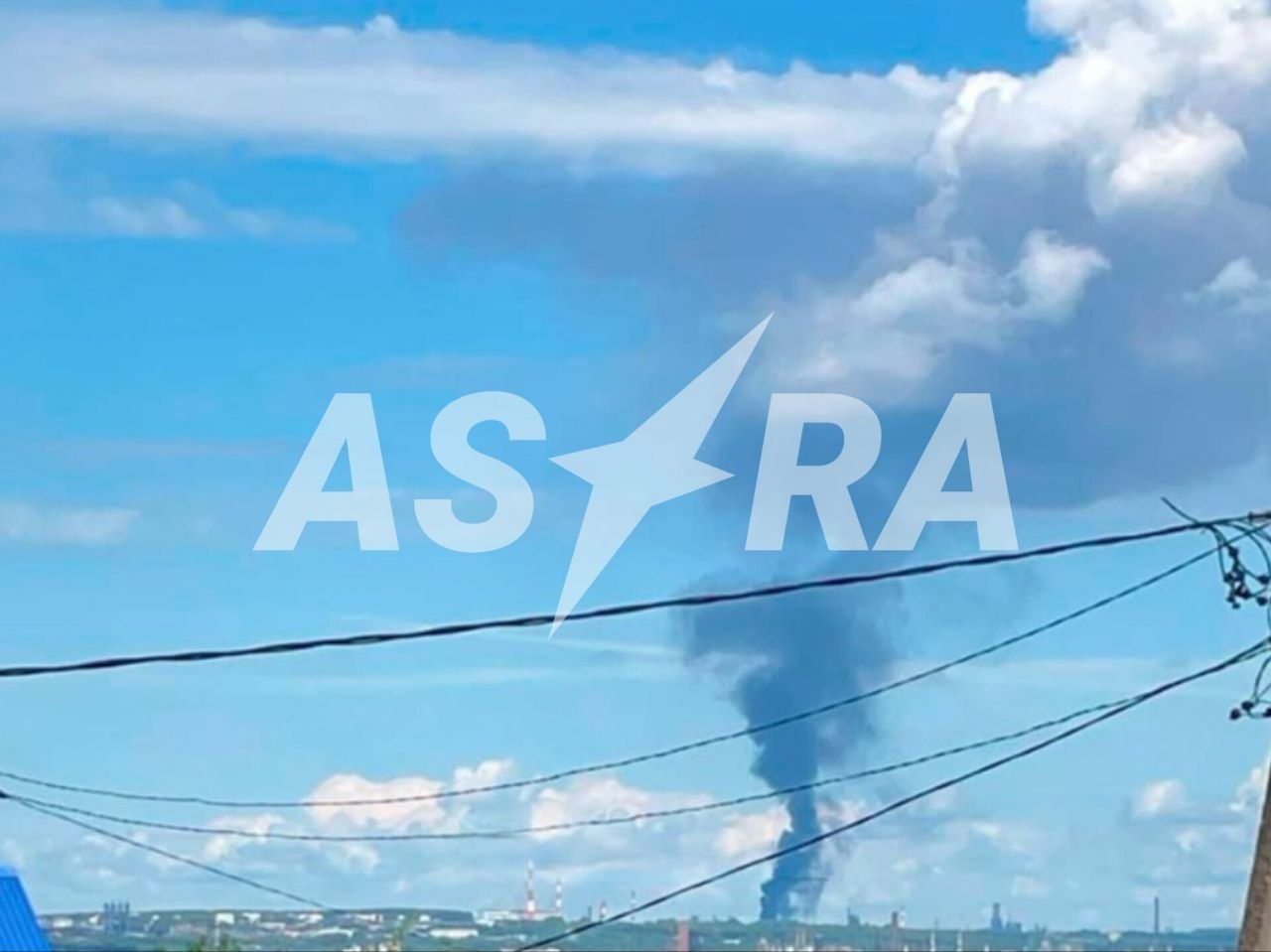
The 2026 holiday season was supposed to be a record-breaking one for Crimea. In March, the authorities of the annexed region promised to welcome more than seven million tourists. However, by mid-June, the peninsula was welcoming tourists with long lines at gas stations, rationed gasoline, and letters from locals expressing their disappointment and shame instead of excitement about their vacations.
In three weeks, Crimea has gone a way that seemed impossible a year ago: from the rear window of the “Russian world” it has turned into what Ukrainian Defense Minister Mikhail Fedorov on June 17 called “the island.” Made it cheap medium-radius drones, methodically cutting the supply lines of the peninsula. The Ukrainian side calls it a “logistical blockade.” The Russian — “temporary difficulties.” ASTRA understands what is really happening.
Beginning
The end of May can be considered the starting point. On May 19, the 422nd Separate Regiment of Luftwaffe Unmanned Systems, operating in the Zaporizhzhia region, showed the results of strikes on Russian logistics at a distance of 70 kilometers from the front line. At the same time, Z-bloggers began actively reporting on strikes on logistics routes connecting Crimea with the front.
On May 21, Vladimir Saldo, Russia’s appointed “head” of the occupied part of the Kherson region, imposed restrictions on the movement of civilian trucks on the R-280 Novorossiya highway, comparing the situation to the Siege of Leningrad, calling it “cynical barbarism.” This comparison is, frankly, expected, as the official language has become accustomed to manipulating history for immediate purposes over the years of war. More importantly, the attacks have been acknowledged at the highest level of the occupation administration.
Further events went on the rise. The Ukrainian Unmanned Systems Forces (USF) concentrated the strikes on the R-280 highway — the only reliable land route linking Russia with Crimea through Rostov-on-Don, Mariupol, Berdyansk and Melitopol. Both the supply of the peninsula and the grouping of troops in the south went along this road.

Since the first days of June, the attacks have switched to bridges. On the night of June 7, drones from the 1st Separate Assault Regiment and the Code 9.2 unit damaged the bridge at Chongar, the shortest crossing between Crimea and the mainland of the occupied territories. Traffic through the Dzhankoy checkpoint was blocked. On June 9, the bridge was attacked again; according to Andriy Kovalenko, head of the Ukrainian Center for Countering Disinformation, this time it was destroyed — satellite images later recorded a pontoon crossing in its place. On the night of June 11, several more bridges were hit — across the North Crimean Canal near Preobrazhenka and Mirny, the road bridge on the route Perekop–Armyansk and the crossing near Stavki. On June 10, after the attack by the Armed Forces of Ukraine, Saldo reported that after examining the bridge between Genichesk and the Arabat Spit, experts decided to organize traffic in reverse mode.
By mid-June, the attacks had shifted from roads to rail. On the night of June 18, drone operators from the “Ballista” unit of the Special Operations Forces of the Armed Forces of Ukraine disabled the railway bridge over the North Crimean Canal near the village of Razdolnoye, a key crossing on the Kerch–Dzhankoy line. Local residents reported two dozen explosions, and according to the monitoring channel “Krymskyi Vetr” assessment, the damage to this bridge could completely paralyze cargo and passenger traffic to the peninsula.
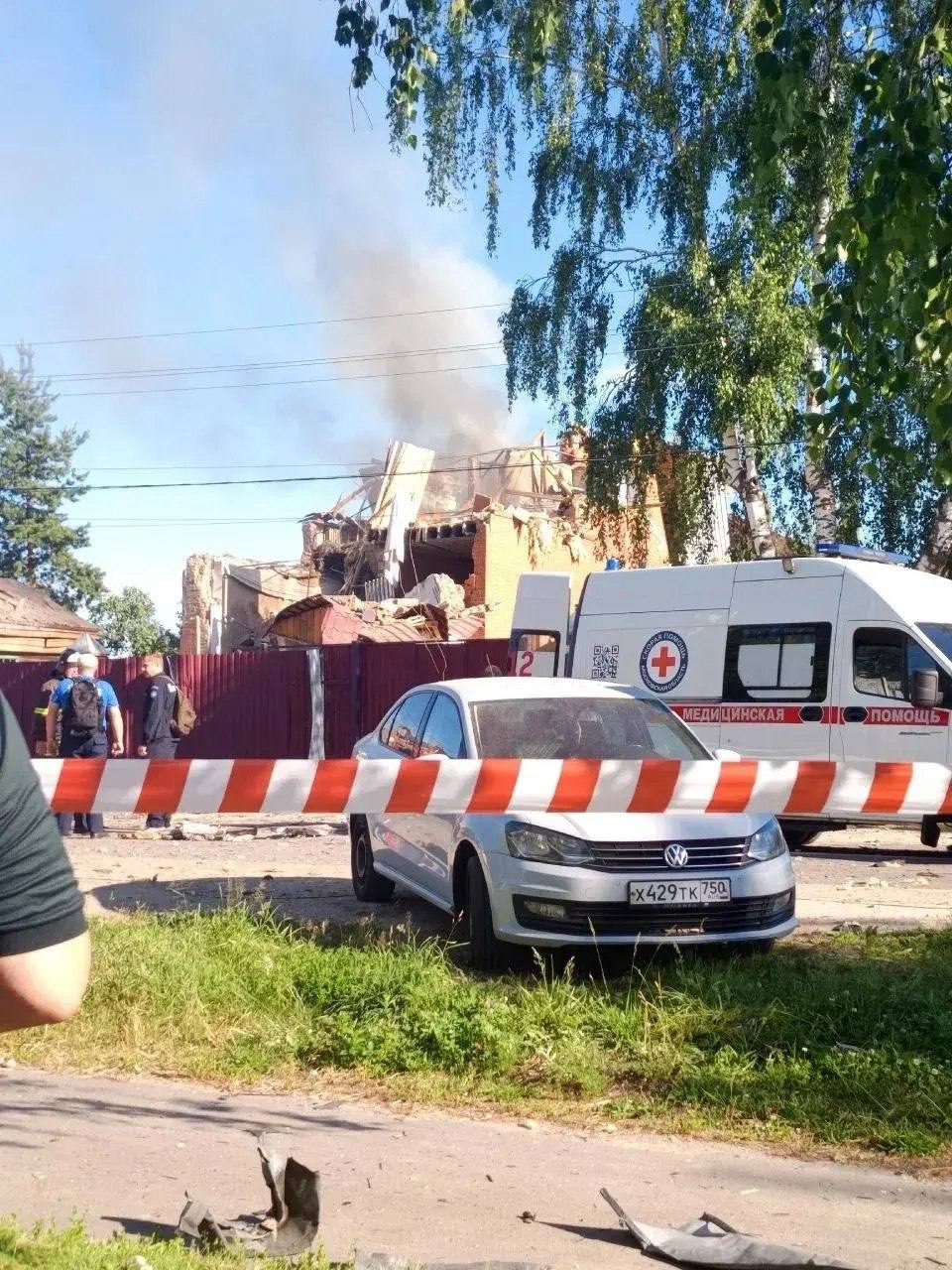
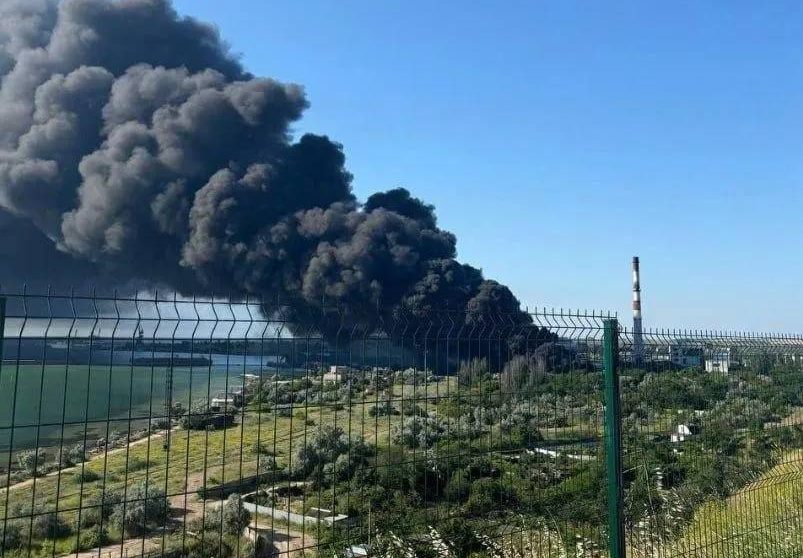
The climax came on the night of June 21. For the first time since the beginning of the campaign, Ukraine has hit both sides of the Kerch Bridge-objects that provide a sea crossing. President Zelensky confirmed that the strikes were carried out at a distance of about 300 kilometers from the front line. On the Chushka spit in the Krasnodar Territory, an oil terminal in the port of Kavkaz caught fire-it supplies fuel to both the Crimea and the south; geolocation footage recorded at least three burning car ferries. The attack also hit the TES-Terminal-1 oil depot in Kerch, near the bridge, and the Panagia ferry at the Kerch Strait, where a person was killed. The ferry service has been suspended. According to Russian reports, four to five people were killed and almost 30 were injured in the attacks on Crimea and the Kuban region.

Previously, the roads and railways were under attack, but now Ukraine is also targeting the third and final supply route: the sea. Crimea no longer has any supply routes that are not under threat.
Against this backdrop, on June 22, the “authorities” of Crimea announced the suspension of admission of children to children’s camps. Later, a video appeared in which a woman claims that she “received a call from the Ministry of Education of Crimea and was told that absolutely all shifts to children’s camps were cancelled this year.”
Why is the Novorossiya highway an weak point?
To understand why strikes on one road could disrupt the supply of an entire region, we need to look at the geography. Crimea has three routes to Russia: the Crimean Bridge, sea ferries, and a land corridor through occupied territories, the infamous R-280.
Since January 2026, all trucks weighing more than 1.5 tons, as well as hybrids and electric vehicles, have been banned from using the road part of the bridge, ostensibly for the sake of unloading the bridge and ensuring its safety. As a result, heavy cargo, including fuel tankers, has been diverted to the Novorossiya highway. According to information from Ukrainian analysts, traffic on the railway part of the bridge has also been restricted, although this has not been officially announced. Ferry traffic has been limited and is also under threat. There is no place for convoys on the Crimean roads: the steppe is flat, the road is straight, and everything is visible from the air.
The detours through Armyansk and Perekop, which are recommended by the occupation authorities, are about 130 kilometers longer than the main route and closer to the front line.

Technology: A Drone That Determines Its Own Target
The main question is how relatively cheap drones were able to do what missile strikes could not achieve. The answer is that the technology itself has changed.
Ukraine has moved to the so-called “middlestrikes” — medium-radius drone strikes on targets in the operational depth, 25-200 kilometers from the front line. But the key is not the range, but what the drones have inside. Russian electronic warfare has learned to jam the radio channel between the drone and the operator, and the answer is autonomy: the drone carries the guidance system within itself.
Ministry of Defense of Ukraine claims that drones with AI are already actively used at the front. The technology is described as follows: the neural network on board analyzes the video stream, distinguishes the silhouettes of military equipment and automatically captures the target when it recognizes the desired object. If the target is an air defense position, the AI itself identifies the launcher or radar and corrects the dive. Such systems has worked stably at the front for six months or a year and hit targets even with active interference.
It is important to note here, what is often overlooked by both Russian propaganda and the panicked users of messengers that I encountered while working on this article. The drone does not “decide on its own who to kill.” According to the U.S. Center for Strategic and International Studies (CSIS), the use of AI is partial: the target is assigned by a human operator, and the neural network guides the drone to the target in the final phase when communication is lost. Additionally, AI helps distinguish between real targets and decoys. The drone strikes the target that has already been selected by a human.

But in the chat rooms of motorists traveling to Crimea, this subtlety is lost, and a completely different fear is born.
“If a drone considers you a threat because you’re driving a jeep with a trailer, it might come after you. No one knows what AI will do to your head,” writes one of the participants in the “Road to Crimea” chat. This popular image of a drone-automaton deciding the fate of a car on the highway is not accurate, but it does reflect how the threat of drones is perceived from the ground.
Another innovation is related to the time between receiving a target and striking it. Ukrainian drone operators now receive commercial satellite images of Russian targets directly on their phones or tablets within 15 minutes of taking the image. Previously, the data had to be centrally verified in Kyiv, which could take hours or even days, during which time the targets could move. This innovation is based on an agreement between the Ukrainian Armed Forces and the Vantor consortium, which owns a fleet of 10 satellites in near-Earth orbit. According to the developers and test participants, this reduced the time from detection of a Russian object to a strike by 90%.
What’s on the ground: coupons, canisters, and queues
Crimeans felt the impact of the logistics strikes directly through their gas tanks.
Since May 30, the peninsula imposed a limit: no more than 20 liters per person. Since June 4, gasoline and diesel have been released primarily to public utilities and emergency services, public transport, security forces, as well as civilian organizations, but also according to pre-purchased coupons. The largest networks of TES and ATAN stopped selling coupons to individuals. Russia-appointed “head” of the annexed Crimea, Sergey Aksenov, switched to manual control of fuel distribution and promised to solve the issue “within a month.”
However, on June 21, Aksenov said that there was no more fuel at gas stations in Crimea, and the coupons were no longer valid.
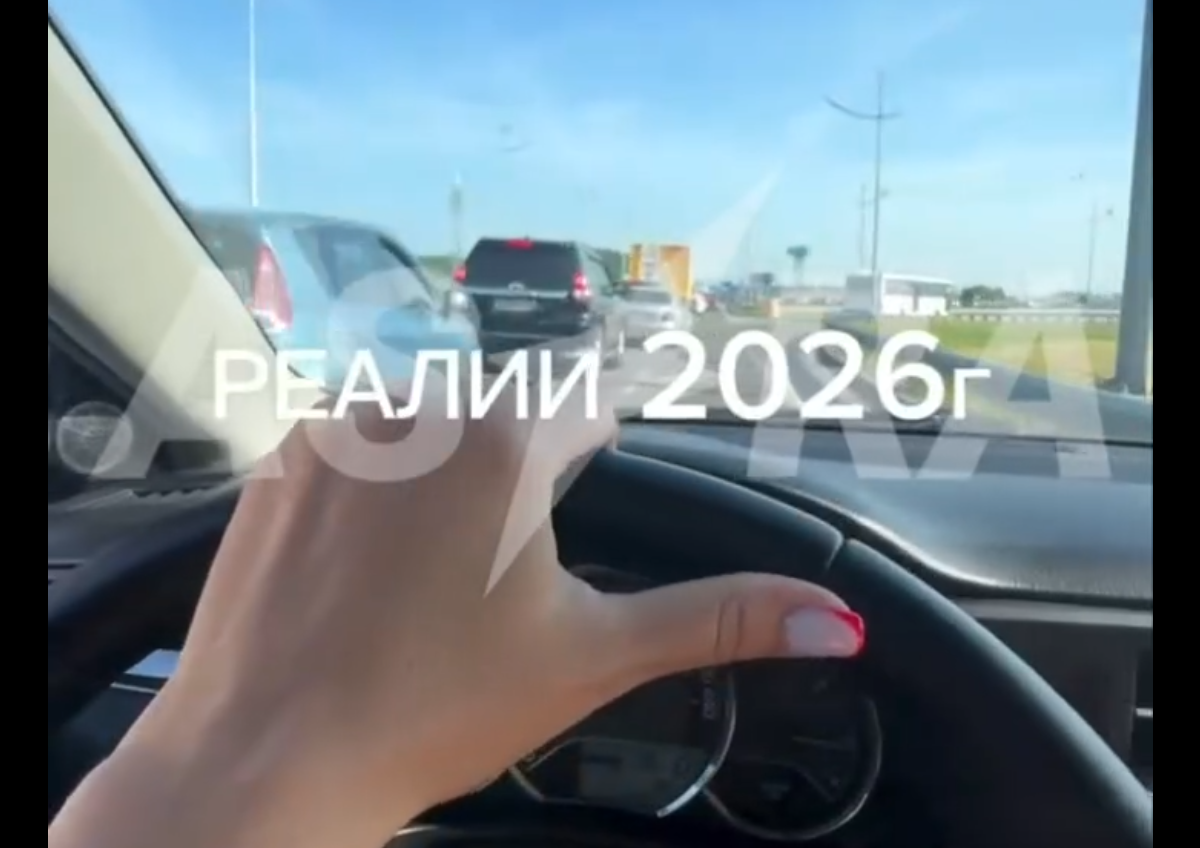
What it looks like in reality can be seen in the chat rooms. “If you’re planning to go to Sevastopol, keep in mind that there are no 95 or 92 gasoline stations. There are queues, but no gasoline. People are gathering in anticipation of a miracle. There are also no gasoline ration cards available,” a typical message from early June. Motorists are planning their routes like a military operation: “Take the M4 to Temryuk, spend the night, fill up the tank and a couple of extra cans, and head to the bridge early in the morning.” Queues are forming at the Crimean Bridge. Rosavtodor reminds us that we can only carry up to 100 liters for personal use.
The crisis has spread to the Kuban: residents of Krasnodar, Anapa, and the Temryuk district, which is closest to Crimea, complain that gas stations are empty because Crimeans are driving there to get gasoline. Kuban Governor Veniamin Kondratyev called this an “artificial hype” due to “the situation in neighboring regions.” The Russian Ministry of Energy proved to be more honest, admitting that “energy companies are facing increased enemy air attacks, which is causing temporary difficulties with fuel supplies in the southern regions.”
On June 15, individual refineries were allowed to lower the quality of fuel in order to avoid exacerbating the shortage in the domestic market. However, to some extent, gasoline sales have already been limited in 23 regions of the country.
In the local chat where there are many commentators loyal to the Russian authorities, frustration is increasingly breaking through the usual rhetoric.
“We voted for the stability and development of Crimea, but we ended up with a broken корыто. Before 2014, it was calmer, and there were no drones flying overhead. Now, the coast is covered with barbed wire, prices are rising, and I’m not even mentioning the gasoline prices. Five years of pointless struggle,” writes one of the participants. Another participant adds, “I would like to know when the fuel problem will be resolved. I am interested in a specific date. Or, as usual, we need to endure it for a while. Then we will get used to it.”
The tourist season, which the peninsula had put its hopes on, has fallen apart. According to data tour operators, from May 24 to June 6, 79% of bookings in Crimea and 71% in Sevastopol were canceled. “You have to love Crimea to want to go on vacation there under the current conditions,” an ironic local car enthusiast wrote in a chat.
At the same time, the picture is not clear-cut. By the twentieth of June, the first signs of stabilization in retail appeared. Alexandra, a resident of Feodosia (name changed), told ASTRA that this phase seemed to have passed.
“A week ago, there was a problem with fuel — they were selling it by the coupon, and then the coupons ran out. But in the last week, gasoline has been available at many gas stations, with restrictions — no more than 20 liters, and you can’t put it in a canister. There aren’t many queues, and the one I was in took only 10 minutes. It’s like usual in the summer.” At the same time, Karolina (name changed), whose family remained in Crimea, told ASTRA that she couldn’t visit her parents “either by car or by train.” “My mother asks me not to go, but I would go — it’s my home,” she says.
Most of all, she is worried about a close relative who regularly travels through the occupied territories, in the area of Mariupol: according to him, during the day, the highway is already being hit, and any cars, not just fuel trucks, are hit. “It is scary. I’m really worried about my family.”
According to Karolina, the fuel shortage has reshaped the entire logistics of everyday life. The car has become a luxury item, as her mother now commutes to work and takes her younger child on buses that rarely run from the village. The situation is particularly challenging for those who rely on their car for income, as “every workday is a quest to find gasoline.” According to her, in the last two weeks, people have been queuing up for 3-8 hours to get 20 liters of gasoline at TES and ATAN gas stations; those who could, filled up at private gas stations, where fuel is about 50% more expensive. After Aksenov’s order, the gas stations have completely stopped operating: “People are looking for gasoline through their acquaintances.” This has also affected the availability of food produce, as people have been panic-buying sugar, flour, and cereals, and fruits, vegetables, and medicines have become more expensive.
Is blockade the goal?
Another question is whether what is happening can be called a blockade. Here it is worth being precise, because the word is willingly used by both sides for opposite purposes.
The commander of the SBS himself, Robert Brovdi (“Magyar”), who announced the establishment of “fire control” over the transport arteries of Crimea, nevertheless refrained from triumphalism. According to him, traffic on the R-280 highway fell from 11,000 to 6,500 cars per day in two weeks, and trucks from 3,800 to 1,100, i.e. by 71%. But he also accidentally said: “The collapse of traffic is not a blockade. However, the current “diet” imposed on this first land corridor, the blood vessel of the occupation group, is sensitive and effective.”
Ruslan Leviev, the head of the Conflict Intelligence Team, to whom ASTRA turned for an assessment, considers the claims of “full control” and “isolation” to be exaggerated. “The experience of this war shows that it is almost impossible to achieve full fire control of the road at a distance of more than 20 kilometers, as it requires a much larger number of drones. Fire control implies that you have one or two drones flying over the road at any given time,” he explains. The destruction of objects is a form of pressure, but a true blockade means that there is almost no chance of passing unnoticed.
Leviev cites the example of the occupied city of Kherson in 2022, when there were fewer crossings over the Dnieper River than there are now, and the Antonov Bridge and the Kakhovka Dam were regularly targeted by HIMARS. Despite this, Russian forces managed to hold on to the city until November.
“There is no full-fledged break, and it is unlikely to happen. However, this pressure is seriously exacerbating all the problems, including fuel and grocery shortages, as ordinary civilian trucks are also being targeted. People will not starve. However, it will be challenging,” says the expert.
In other words, it’s more accurate to talk about a methodical strangulation rather than a blockade: the routes are formally in place, and some traffic does pass through, but the flow is reduced to a level that doesn’t meet the needs. Military analysts refer to this as a “logistical lockdown.” It’s crucial to note that such a threat cannot be eliminated with a single counterattack. Instead, either Russia needs to suppress drones en masse (which it has yet to achieve due to autonomous targeting bypassing jammers) or shift the frontline to ensure that the highway is outside the range of mid-strike attacks.
If the attack on Crimea has little effect on the troops, then why is it happening? Leviev’s answer contradicts the intuitive “they are preparing an amphibious assault” or “they are suffocating the front.”
“This has almost no effect on the troops. Only the Kherson, Stepnogorsk, and Orekhov directions, which are not the most active sectors of the front, depend on Crimea and the land corridor. Moreover, the 2026 war does not require large fuel reserves, and equipment is used very sparingly,” he says.
According to his assessment, the campaign’s goal is different: “To make Crimea uninhabitable” — I’m putting it in quotation marks, but it’s easier to understand the goal as we see it. To put pressure on society, the population, and the region’s economy. Potentially, to reduce the government’s popularity before the upcoming elections in the fall. It’s no coincidence that Zelensky recently wrote about the ratings of United Russia.”
There is also a paradox that Leviev points out: the difficult situation in Crimea may actually benefit the Kremlin. “Russian propaganda will likely try to use this in its arguments: look, they will say, at what the Ukrainian government is doing to you, how it is actually attacking you, leaving you without light, water, or fuel. This is the true face of the Kiev regime.” The population will be told that “these are difficult times, and we must endure.”

How will Russia respond
The Russian response so far has been limited to manual control and promises. Aksenov is manually regulating fuel supplies, and the Ministry of Energy has launched an interactive map on its website showing the availability of gasoline in different municipalities. According to the pro-government publication Vzglyad, new electronic warfare systems and FPV interceptors called “Yelka” have been deployed on the Novorossiya highway. Ukrainian military expert Sergey Beskrestnov suggests that the Russian Armed Forces will begin to accompany tanker trucks with mobile fire groups. There have been cases of suspected military vehicles disguised as civilian vehicles.
Leviev warns that it is impossible to predict what will be done to counter it, but obvious steps are already being taken, such as the use of nets along roads, jammers on cars and against Starlink satellites, and disguising vehicles as civilian transport. According to Leviev, it takes an average of 3-4 months to adapt to this war, and the pressure on the corridor began in early May. Much also depends on whether Ukraine has enough drones: “The scale of the war’s geography forces us to prioritize. If there is an urgent need to redirect resources to another direction, such as Kupyanskoye, it could lead to a rapid decrease in the intensity of attacks along the corridor.”
His forecast for 2-3 months: “further deterioration of the situation, but without real isolation”, up to emergency measures such as humanitarian convoys of the Ministry of Emergency Situations with fuel and food. And Russia’s mirror response: increased attacks on trucks, including civilian ones, in the border regions of Ukraine: this is already happening and, according to him, will become more widespread.
Meanwhile, Ukraine’s Minister of Defense, Fedorov, has promised to turn the peninsula into an “island,” and Brovdi has advised Russian logists to look into bypass roads, saying, “Siberia is your rear base.” Behind the rhetoric lies a simple and unwelcome arithmetic for Moscow: for the first time in eleven years, one of the main symbols of Putin’s rule finds itself in a position where its supply depends on whether a private tanker driver dares to venture onto a highway that is being monitored by a drone that can distinguish targets from background.
Author: Semyon Vladimirov