Before his death, Stanislav Rayevsky told how his commander shot a father of five. ASTRA names the killer.

Last spring, ASTRA received a video message from Stanislav Rayevsky, who was mobilized from the Moscow region, in which he told about the murder of his colleague by the commander of the 1430th regiment. The command suggested that witnesses of the murder either go to trial or stay silent. “We chose the second option.” Rayevsky asked to publish this video after his death. ASTRA fulfills the last will of Private Rayevsky, and also names the murderer and those who helped hide this war crime.

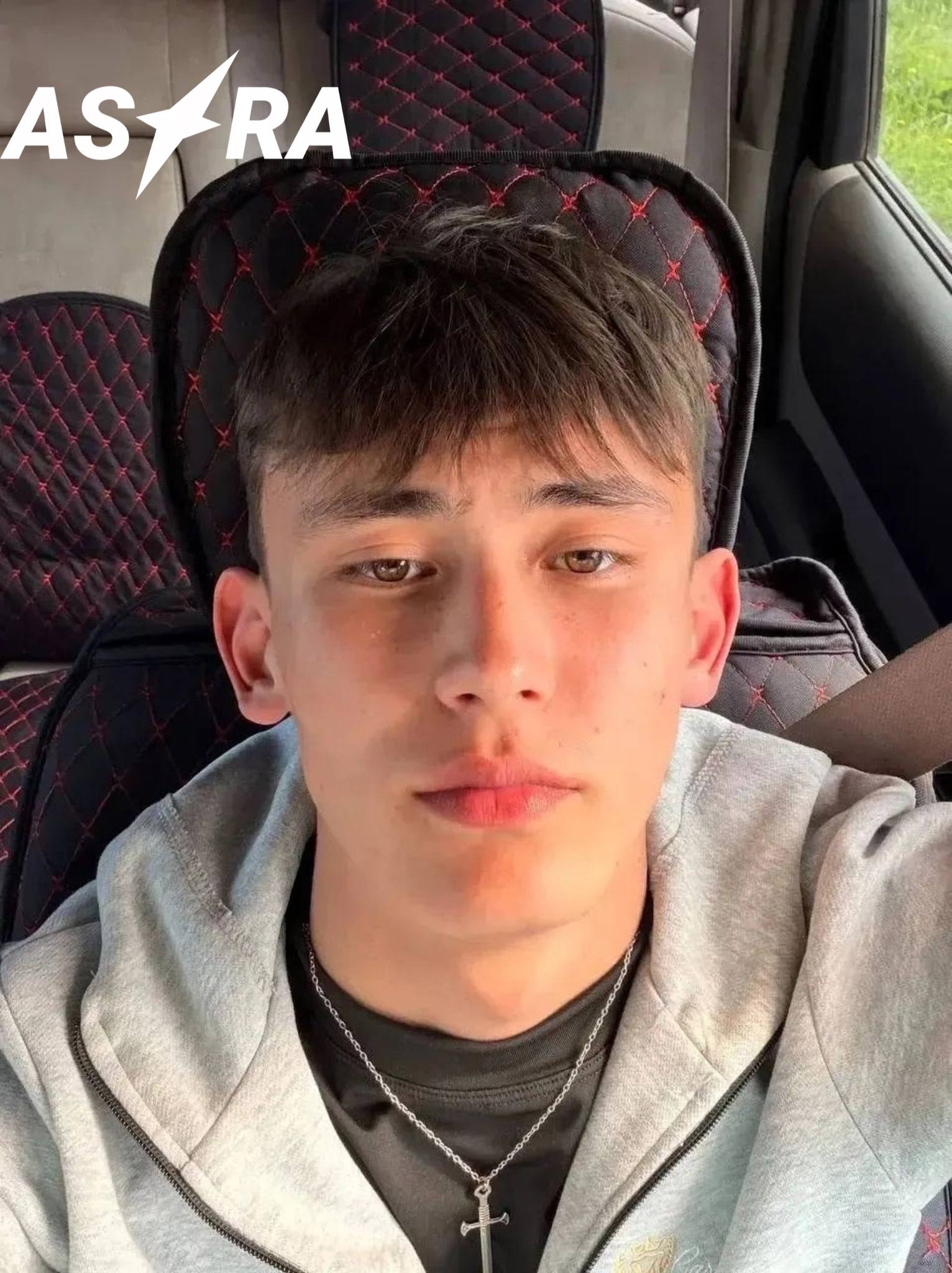
On May 21, 2023, more than a hundred people came to say goodbye to Alexey Serov. “That was an unbelievable number of people. I tried to count exactly how many there were, but in the end I lost count,” says his widow Ekaterina. Serov was fond of football since high school, was a fan of Spartak. Following his beloved team, he traveled extensively around Russia and so made friends all over the country, says Ekaterina.
“Alexey and I were probably like two halves of a whole. He was such a kind, sympathetic person. I loved him very much. And I still love him,” says Ekaterina. They met in 2016 on a dating site. “It turned out that he lived in the area where I had lived since childhood, studied almost next door, meaning that we crossed paths, but never met. And when we met, everything turned around very quickly. My children, all four of them, quickly pulled up to him… And a month later we started living together,” recalls Ekaterina. That same year, their daughter Milana was born — now she has already gone to the first grade.


“At first I had a habit of saying “my children”. He interrupted me and said, “Forget the word “yours,” these are our children,” says the widow. — No, they did not call him “dad.” They called him Lyosha, but they always respected his opinion, they always turned to him for advice. Despite the fact that he is not a biological parent, the older children considered him their father. The eldest son is now 21, two are 18 and the middle daughter is 16 years old. I didn’t work, my husband always supported us,” she says.
Formally, Alexey did not take custody of the children from Ekaterina’s first marriage so that they could receive survivor’s allowance after the death of their biological father. Because of this, he was not given a referral during the mobilization as he was supposed to. Ekaterina says that her husband did not consider the idea of running away from the military enlistment office. “Although friends offered to help, he said that it was not time to hide from the state in his old age with five children. Like, if you have to go, then you will go,” she says.
Serov joined the 1430th regiment, created in 2022 from mobilized residents of Moscow and the Moscow region. According to the documents, Serov died from shrapnel wounds while serving in May 2023. He was 41 years old.
“There was an attack… As I was told, he was sent on patrol in an open place. Those mobilized were sent there for the time of shifting — contract workers were being changed. And at that moment there was a shelling. The Zaporozhye direction, the village of Rabodino,” says Ekaterina.
When asked if she knows another version of his death, the woman answers “Yes.” She’s obviously nervous — as if she’s afraid of something. One of her colleagues told her exactly how Serov died only six months after his death — and only after he himself ended up in another unit.
According to a colleague, Serov stood up for another military man, whom the brutal commander with the call sign “714th” shot in the leg. What happened next is not completely clear to the ASTRA interlocutors. There was probably a scuffle. As a result, the battalion commander, falling, allegedly accidentally pulled the trigger and shot the father of many children in the head.
“After that, in order to hide their tracks, they put the already dead husband on a butterfly [PFM-1 antipersonnel mine]. So that the autopsy showed shrapnel wounds,” says Ekaterina.
To hide the bullet wound, at the funeral, Alexey’s head was covered with a cap, on top of which they put a traditional bandage with Orthodox icons [photo is at the disposal of the editorial office].
“A colleague told me: ‘Be grateful that he was not made a deserter. Let him remain a hero to everyone. It’s better than being penniless.’ I don’t need this money [payments for death in battle]. I didn’t go anywhere. I have no evidence, only the words of a colleague. This battalion commander continues to live, he got away with it all,” says Ekaterina.
“The command got rid of me”
“I want these people to be punished. If something happens to me, the video will be made public. I’m not afraid of death. The truth is the truth,” the video message of the mobilized private Stanislav Rayevsky ends with these words. He sent several such videos to the ASTRA editorial office back in 2023. In the video, he often calls the murdered Serov by his call sign — “Capital”. Rayevsky himself is from a small town in the Moscow region. He was 41 years old when the mobilization began in Russia.
According to Rayevsky, Serov’s murder took place on May 2, 2023 in the Zaporozhye region. That day, Rayevsky, Serov and five other colleagues drained two bottles of moonshine that “Capital” had brought from the village of Chistopolye. The battalion commander with the call sign “714th” found them when they brought him a gas cylinder.
“He asked everyone: “Have you been drinking?” Everyone answered: “Yes, we were.” Then we began to tell him that we had problems there, that the command had abandoned us: we had no shovels, nothing, we had nothing to dig with. To which he shot Alexey Serov in the head. So that you understand, this is the father of five children, whom comrade “714th” left without a father,” says Rayevsky in the video.
According to him, the next day, the military police took all six witnesses to the occupied city of Tokmak, where they spent the night “in some kind of basement.” By the morning, the military was visited by the deputy commander of the regiment with the call sign “Music”.
The deputy chairman “Music” offered the military two options for the development of events. He spoke to the witnesses one at a time: either they would be trialed for allegedly “rushing” at the battalion commander — who, accordingly, was only defending himself. Or the “714th” will be sent “to the front, his wife receives payments, he receives a medal, and the witnesses of the murder close their mouths.”
“We chose the second option,” Rayevsky said. The witnesses of the murder were returned to the regiment’s location.
In the videos that Stanislav Rayevsky sent to the ASTRA editorial office, he claims that after the murder, the command tried to get rid of the witnesses. He was taken away, without motivating anything, after the funeral of the “Capital”, on May 18. Rayevsky was held for 10 days in the former building of correctional colony 15 in the city of Perevalsk “LNR”. The military is sent there for refusing to return to battle, demanding leave, various violations of discipline, and so on.
“A gathering point for military personnel who have temporarily lost their combat stability,” the prosecutor’s office called the building of an abandoned colony in Perevalsk, where it illegally detains “refuseniks” from several formations of the Russian army. An ASTRA interlocutor reported in August 2024 that the military did not have access to water and light in the IK-15.
According to Rayevsky, during his service, he never managed to transfer a power of attorney for his wife so that she could receive his payments. The military police put pressure on this — in an abandoned colony, they promised a private and others that they would give him a power of attorney if he signed a transfer report to the 57th brigade. Rayevsky signed the report, but they did not give him a power of attorney. At the same time, as they said to the mobilized in the unit, he was officially not in the 57th brigade at that time.
“As I see it, this unit was created to take unwanted people there to reset them. They wrote that I am a “refusenik”, that I refuse to fight, although I do not refuse to fight,” he said. — In the institution where I was brought, I was personally told that the command had got rid of me. As I understand it, either I should be reset here in the 57th regiment [meaning the brigade], or I should die. And make sure that the calculation sees what happens if these guys talk,” Rayevsky says in the video.
According to ASTRA, “refuseniks” and “undesirable” military commanders have been transferred to the 57th brigade for two years now. Often after the abandoned colony in Perevalsk and torture.
Rayevsky adds: “I will make this video public if something happens to me. I’m not afraid of death. But if something happens to me, or they reset me, I will die, my daughter will publish this video. <…> And this case will rise. And this video will get to Alexey Serov’s wife. I’m not bluffing. <…> The people who led the man across the front, concealed this crime, and including the commander of the second battalion of the regiment 1430, who shot the soldier — the father of five children — will receive real terms.”
In a video sent to the editorial office on June 19, Rayevsky promises to leave the “SMO zone” on his own if his family does not start receiving his cash payments by July 10. “I live here like a homeless person, I have nothing. I don’t have anything to buy. I don’t have any money, it’s stuck in my account. And I have a family without a penny. And family is sacred, it is a valid reason for leaving the zone of its own. Since it turns out that the state and the command left me here,” he concluded.
A few weeks after recording the video, Rayevsky died near Bakhmut — near the village of Kodema, from where he recorded video messages. According to his brother, Rayevsky was killed by a shell drop. He was buried in a sealed coffin.
“I asked him to tell me what really happened, but he just shrugged his shoulders and kissed his daughter’s hands, as if feeling guilty.”
In the video, Rayevsky calls the killer battalion commander exclusively by his call sign, “714th”. According to Rayevsky’s relatives, Serov’s widow and his colleague are 53—year-old Serditov Sergey Valeryevich, a resident of Zelenograd. It is known that before the war he played amateur hockey and raised a hockey player son.


Contrary to the promises of the deputy chairman “Music”, Serditov escaped punishment. According to ASTRA sources, he was never sent “to the front.” However, six months later, according to Ekaterina, the battalion commander was transferred to another unit, to the tankers, where he continues to serve to this day.
Serditov did not respond to calls from ASTRA journalists.
Alexey Serov’s widow Ekaterina told ASTRA that according to his colleagues, not only Stanislav Rayevsky died in the assaults, but also other witnesses to the murder. Ekaterina shows messages from a colleague of her late husband: “We were shut up. But too many people saw how it was. Half of them are gone. If only fewer people had seen it. We would have either been fucked or imprisoned too. I could have told you everything then, my soul was crying. But you couldn’t do that. I had to lie. Keep silent. Lech would have done the same in my place. My family and I grieve with you. And now I’m writing this to you with tears in my eyes. Honestly.”
ASTRA has identified the names of two more commanders from the 1430th regiment who knew about the murder and covered it up. The first is a military with the call sign “Music” — the one who suggested that Rayevsky and other witnesses “close their mouths” or go to trial. According to ASTRA sources, this is 46-year-old Alexander Dmitrievich Filippov.

Another officer who knew about the murder was Albert Vladimirovich Bezvisilny with the call sign “Ob”. He confessed this to Alexander Rayevsky’s brother Nikita. “He wasn’t at the funeral. I called him and asked him why not a single coward from their unit was there [at Rayevsky’s funeral]. Since there must be a representative of the unit. And we started talking,” Nikita says. He describes Bezvisilny as an old man — at the time of his conversation with Nikita, he was already 60 years old.
“They knew that I knew everything,— Nikita continues. — I do not know whether I wanted or did not want [“Ob” to cover up the murder]. But he knew about it,” Nikita told ASTRA.
“Music” did not respond to numerous calls from ASTRA journalists. The powerless one died in the war no later than January of this year. He was a teacher.
On the suicide videos, Private Rayevsky is sure that numerous witnesses will tell about the murder of Serov: “These guys, witnesses, I know that they will not ditch me, that they will confirm all these testimonies anyway. I will prove that I am not bluffing.” Even a year and a half after Serov’s funeral, Rayevsky’s surviving colleagues flatly refuse to discuss the death of a father with many children from Moscow.
Authors: Anna Snegireva, Anastasia Chumakova