Russian deserters who do not want to fight face refusals to grant asylum and the risk of being deported to Russia, where they face the threat of torture. Deutsche Welle and ASTRA report on the fate of these people and the torture system in the Russian army.
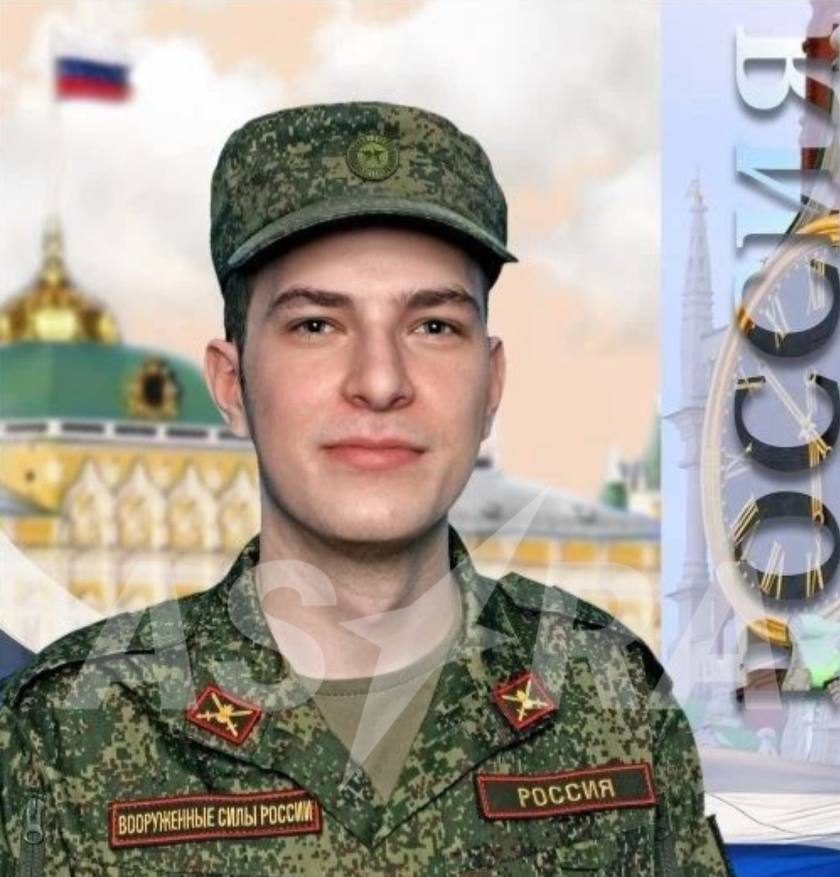
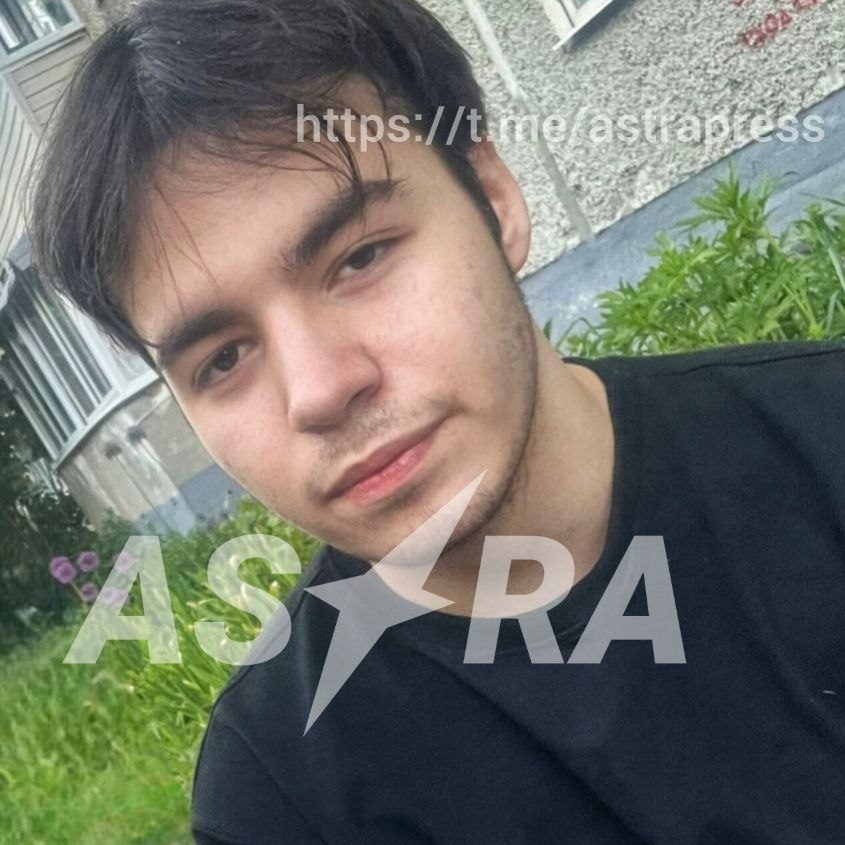
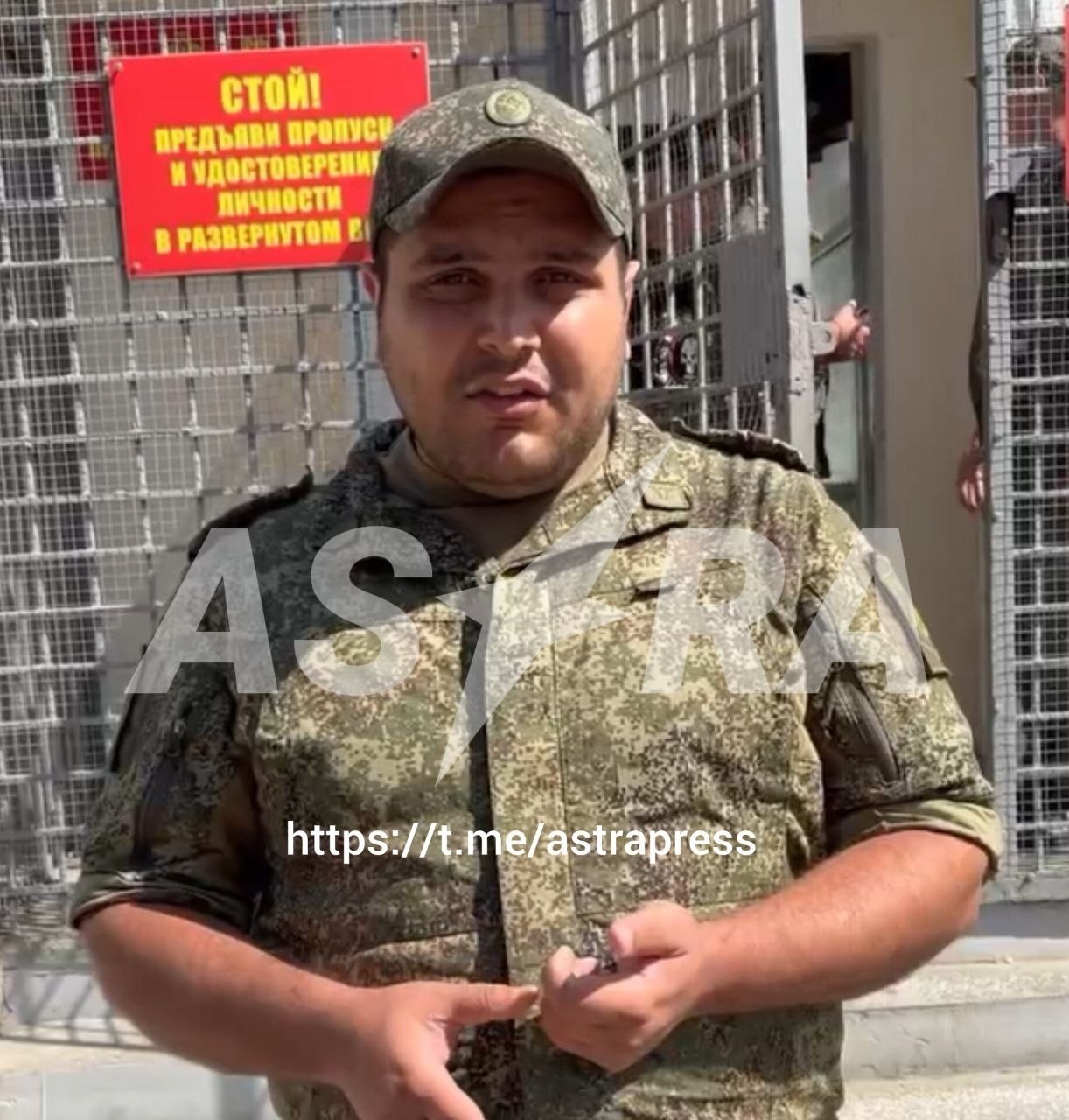
When Russia’s full-scale war against Ukraine began, Nikita Zvezdov was 15 years old. Two years later, in April 2024, when he turned 18, he received a draft notice after being expelled from a technical college in Krasnoyarsk. The young man believes that he was intentionally “failed” during his exams. In recent years, there has been increasing evidence in the media that students are not only actively recruited for the military but also prevented from successfully passing their exams for this purpose.
Conscription and signing of a contract

Nikita was personally handed a draft notice in his apartment, and he had almost no knowledge of how to avoid military service. In May 2024, he was sent to Military Unit 25573 in Sergeevka, near Ussuriysk. This military unit is known for its notorious reputation and is often referred to as the “most criminal” military unit in Russia due to the regular deaths of soldiers, stories of hazing, extortion, and beatings. “They’re constantly covering up cases, murders, and everything else that’s reported in the news, which is basically true,” the man says.
Officers began to persuade him and other conscripts to sign contracts at the distribution point, and then on trains on the way to the unit. “I promised myself and my relatives that I would not sign a contract for the” SVO ” (Russia’s war against Ukraine. – Ed.) I’m not going to. Before young fighter’s course we were transferred to Sergeyevka. They were scaring us that this is the terrible part — and it is. (other military personnel. — Red.) They beat me in the laundry room, shot me in the legs with air guns, and made me run around in a bulletproof vest and an(all-terrain protective suit. They sent me to a training ground, where they also did whatever they wanted — officers shot many conscripts in the legs, beat them up, and punished them for everything they could and could not do. Do 200 push-ups in a gas mask, and run 50 laps in a bulletproof vest with 25-30 kg on top,” the young man lists.
“I managed to hold out for several months at this pace, and I even had suicidal thoughts,” he continues. After another conflict, Nikita reportedly even attempted to jump off a cliff near the training ground before being stopped by officers. Following this incident, Senior Sergeant Valery Kuzmin (call sign “Kosmos”) informed him that he had no choice but to sign a contract to be sent to war. The young man was forced to sign the prepared document under threats of a criminal case and insinuations that his military service would become even worse. “Considering that I still had a little less than a year to serve, I already imagined that I wouldn’t live to see this moment. There was no choice as such – I wouldn’t have lived,” Nikita recalls.
His story is typical: due to a shortage of people, the Russian authorities are actively encouraging conscripts to sign contracts with the Ministry of Defense. Mothers of military personnel told ASTRA about the deception and torture of their sons, who were pressured to sign papers and go to war in Ukraine, even though these young men had promised not to become contract soldiers before serving their mandatory military service.
In May, the Higher Administrative Court of Berlin-Brandenburg overturned a decision by the Administrative Court of Berlin to grant protection to a Russian conscript. According to the lower court, the conscript may face pressure and coercion to sign a contract for war during his military service, but the court of appeal did not find the risks convincing enough to grant protection.
Flight from Russia to Germany
A month after signing the contract, Nikita was sent to a training ground near the city of Bikin in the Khabarovsk region “for combat coordination.” First the captain said: “You are scouts, we are going to Mariupol.” But by October, the young man and his colleagues were confronted with the fact that they would be sent to Melitopol by attack aircraft. This actually meant certain death. “And I realized that in principle, here I definitely have no choice but to run. You won’t be able to wait it out either,” he explains.
After receiving his first salary as an ordinary soldier of 40,000 rubles, Nikita asked for a leave to buy supplies before being sent to the front. A former prisoner was assigned to monitor him. Nikita was required to report to the prisoner every few hours via WhatsApp. Fortunately for Nikita, the assigned guard did not fulfill his duties. After discarding his uniform and packing his belongings, Nikita purchased a ticket to Armenia.
“Until 2024, I was more focused on my own life: studying, working, and so on. Like many others, I thought this “misunderstanding” would pass. However, things took a drastic turn, and the war continued for an unknown amount of time. Eventually, I was drafted into the army, even though I had no desire to join before the war. Unfortunately, I was unable to “get out of it.” The war itself was unacceptable to me, and when I was forced to sign a contract, I didn’t want to go into the meat grinder and kill people, or even die myself. So I left as soon as I could,” says Nikita.
It wasn’t until six months later that he was put on the wanted list for desertion. During this time, he was able to obtain a Russian passport in Armenia. With this passport, he traveled to Germany via the “Balkan route.” After arriving in Bosnia and Herzegovina, Nikita moved to Croatia and applied for political asylum. In early December 2025, he managed to reach Stuttgart, Germany, without being stopped for document checks. Nikita applied for asylum in the state of North Rhine-Westphalia, where his grandfather, a Volga German, lives. The young man was assigned to a refugee reception center in Halberstadt, in the state of Saxony-Anhalt in the east of the country.
Germany denied Nikita asylum and, in accordance with the Dublin Agreement, ruled that Croatia, as the country of first entry into the EU, should handle the case. Based on the cases known to human rights activists, it is likely that he will be deported to Russia. According to the standard procedure, the German authorities must “transfer” the case to Croatia within six months. Nikita himself plans to remain in Germany until the end of this period, when the responsibility for his case will legally transfer to Germany.
The chances of Russian defectors seeking asylum in Germany
According to human rights activists, there are almost no chances for Russian deserters to obtain asylum in Germany. However, representatives of the previous government had previously stated that refusing to serve in the Russian army, as well as deserting from it, would be considered a valid reason for obtaining political asylum in Germany. These public statements by politicians were not supported by legal provisions, according to Alexey Kozlov, a human rights activist from the Berlin-based organization Solidarus. According to him, the German legal system, if interpreted literally, does not only imply mobilization and sending to the front as a basis for granting asylum.
“There is a draft in Germany itself, but it’s just on hold. The German law states that it is possible to mobilize and send people to war. The state cannot contradict itself and say, ‘We are good, we will send them to a good war, but they are bad,’” Kozlov explains.
In practice, it is possible to apply for asylum in such a situation if the person was sent to Ukraine for political reasons, according to Kozlov. The Federal Office for Migration and Refugees (BAMF) has confirmed this approach to DW. However, according to Kozlov, the problem is that Germany has already rejected many asylum applications, and the authorities do not want to create new precedents. “Many applicants had no grounds for obtaining protection, but in general, the Ministry’s position is clear: we do not want to grant international protection on this basis,” Kozlov concludes.
The BAMF responded that, as in other cases, an individual approach is taken when asylum applications are made by Russian defectors, and the decision is made based on face-to-face interviews and consideration of all the facts provided, “only if there is a real, individual, and justified fear of persecution.”
In response to a question about the deportation of deserters who face the threat of torture or being sent back to the front in Russia, the German Interior Ministry confirmed that the ministry is “generally aware of cases of torture” in the Russian army, and that decisions are made based on information from the Information Center for Asylum and Migration. This center collects reports from the Ministry of Foreign Affairs, the European Union Agency for Asylum, and information from UN reports. One of these reports, presented at the UN Human Rights Council in Geneva, was based, among other things, on ASTRA’s investigations into torture cells in the Russian army.
Torture basements for refuseniks

Since the beginning of Russia’s invasion of Ukraine, ASTRA has discovered 29 illegal detention centers for Russian soldiers who have refused to participate in the war. These centers are sometimes referred to as “concentration camps.” In these centers, officers extort money from the soldiers, subject them to inhumane conditions, urinate on them, starve them, torture them, beat them, and even kill them.
– Zaitsevo, Luhansk region;
– Zavitne Bazhannya, Donetsk region;
– Dokuchaevsk, Donetsk region;
– Perevalsk, former colony No. 15, Lugansk region;
– Rubizhne, basement in the commandant’s office, Lugansk region;
– Kremennaya, Luhansk region;
– Staromlynivka, Donetsk region;
– Basement in Starobelsk, Lugansk Region;
– Abandoned houses in Golubovka, Luhansk region;
– Center in Bryanka, Luhansk region;
– Novotroitskoye, Donetsk Region;
– Children’s camp “Berezka” in Makarovo, Luhansk region;
– Amvrosiyivka, Donetsk region;
– Borovoe, Kharkiv region;
– Rassypnoye, Troitsky District, Luhansk Region;
– Sofiyivka, Luhansk region;
– Petrovskaya Mine in Donetsk, Donetsk Region;
– Torture chamber at the former mine automation plant in Makeyevka, Donetsk region;
– Former Aspect Shoe Factory in Makeyevka, Donetsk Region;
– Commandant’s Office in Donetsk at 138 Ivan Tkachenko Street, Donetsk Region;
– Mulino, Nizhny Novgorod Region, Russian Federation;
– Melekino, Donetsk region;
– “Infirmary” in Ochertino, Donetsk region;
– Basement in the village of Peski, Donetsk region;
– Lisichansk, Luhansk region;
– Basement of the police department in Nozhay-Yurt, Chechen Republic of the Russian Federation;
– Enakievo, Donetsk Region;
– City Psychiatric Hospital No. 1, Donetsk, Donetsk Region;
– Military unit No. 42600 at 29 Kuibyshev Street, Donetsk Region.
These improvised detention facilities were set up by the military in basements, abandoned industrial facilities (one of them was found in a coal mine), camps, private homes, and other premises. Thousands of Russian military personnel and Ukrainian citizens, including wounded and disabled individuals, have been subjected to torture in these facilities. Most of the illegal military prisons identified by ASTRA are located in the Russian-occupied regions of Luhansk and Donetsk in Ukraine, but there are also some in Russia.
For example, in Mulino in the Nizhny Novgorod region, “guilty” military personnel — mostly mobilized — were illegally detained and abused in a destroyed building on the territory of the headquarters of the 47th division. In the former armory room, men were kept for days without water, food, or a toilet, under the supervision of military police. They were not allowed to undergo medical examinations or surgical procedures, and were “kept like cattle.” A mobilized soldier who had lost part of his leg in the war was held in this room for several days. The military was bullied, including with the help of an airsoft grenade.
At least three detainees were broken in the ribs with a police baton, and then sent back to the war to “cover up” the incident. The names of the four victims are available to the editorial staff. The head of the medical unit is aware of what is happening in the torture chamber, but does not report it anywhere. The applicant’s appeal to the Russian Investigative Committee and Prosecutor’s Office was refused to initiate criminal proceedings. According to local security officials, no one was forcibly detained in the unit, the military calmly waited for a medical examination, and phones were taken only from those who violated discipline.
In the basement of a police station in the village of Nozhay-Yurt in Chechnya, the military kept Russians who wanted to sign contracts with the Ministry of Defense for months without free access to a toilet or food. It is alleged that instead of being sent to the front immediately, they were kept in the basement in order to be exchanged for their compatriots and thus return Chechens who were threatened with “meat assaults” from the war.
The risk of deportation after escaping from a torture chamber
Those who manage to escape from such basements are threatened with “zeroing” – that is, murder by their commanders. Illegally mobilized Donetsk resident Alexander Barlet was captured by the military police and placed in the sixth commandant’s office of Donetsk at 138 Ivan Tkachenko Street. There he was put in a basement where there were eight others accused of deserting their unit. Barlet spent about a week in a room designed for six people, where he was fed dry rations, forced to use a bottle instead of a toilet, and taken out to work by the officers during the day. Later, he escaped and shared his experiences. On December 30, 2024, he was targeted in an assassination attempt in Donetsk. Barlet survived, but he was accused of attacking law enforcement officers and faced criminal charges of attempting to kill a law enforcement officer.

Not all participants in the war in Ukraine support the Russian government. For example, Georgy Filatov participated in rallies in support of Alexey Navalny in Russia, but was arrested by the police after trying to resell game consoles through an illegal scheme. The security forces forced the young man to sign a contract with the Russian Ministry of Defense in order to avoid punishment. As a result, the 19-year-old was sent to the front, where he was wounded, deserted, and managed to leave Russia.
However, even if Russian deserters manage to leave the country, the threat of being deported under escort to their homeland remains. In Russia, they will face criminal charges, being sent to the front, and threats and torture if they refuse. This is what happened to Artem Vovchenko, who was unknowingly enlisted as a contract soldier. The man managed to escape from his military unit in Gyumri, Armenia, and fly to the United States, but he was deported to Russia by the U.S. Immigration Service in August 2025. In Moscow, Vovchenko was detained at the airport, but he was later allowed to leave the country again.
Deportations from Germany
Germany has not stopped deporting people to Russia. According to the Bundestag, as of the beginning of 2026, 126 people were deported directly to Russia in 2025, and 42 of them were sent by plane, accompanied by airline security personnel. With the new government coming to power in Germany a year ago, the chances of asylum for deserters, which were already low, have almost disappeared, according to Alexey Kozlov from Solidarus.
According to him, human rights activists are aware of a few successful cases where Russian army deserters have been granted asylum, but these individuals often do not want to communicate with the media. In March, Kozlov received a denial of asylum for a person who clearly met all the criteria. “As someone who has been working on asylum cases in Germany since 2013, I was shocked by this denial. Cases that I would not have worried about a year ago have now been denied,” Kozlov admits. Since the beginning of the war, he had no illusions and discouraged Russian conscripts from seeking asylum in Germany.
The man who was rejected did not want to share the details of his story with DW, citing severe stress. Some people who are rejected try to seek asylum outside the European Union, such as in the United Kingdom.
By boat across the English Channel
This is exactly what Bakhrom (name changed) did. In 2020, he came from Tajikistan to Moscow to work. In February 2024, when his work permit expired, Bakhrom went to Kazakhstan to return to Russia and renew his migration card. On the way, he was detained by the police. “We thought that, as usual, we would give them five thousand rubles and they would release us. There had been many such cases in the past,” Bakhrom said. But during the week, the police officers at the station forced him and three other acquaintances to sign a contract under the threat of planting drugs. The police officers assured them that once they signed the contract, they would not be sent to the front, but would be sent to “build or dig something.”
Two days later, Bakhrom and the other detainees were taken by the military and, along with about a hundred others, were taken to the Ukrainian border. After three weeks of training, the man was taken to the city of Popasnaya in the Luhansk region, where he was assigned to the assault unit a month later. “There, I saw people being tied to trees and beaten. If I had argued with anyone, I would have been beaten for a day or two, and eventually I would have agreed,” he recalls.
Bakhrom, who became an assault rifleman under the threat of torture, participated in the first two assaults in Soledar, where he was wounded and spent two weeks in the hospital. After that, he was sent to the Kursk region. There, he again served as an assault rifleman and was hit by a drone. With shrapnel wounds to his right arm and legs, he was taken to a hospital in Tula. After three months of treatment, his arm never fully recovered. At the hospital, Bakhrom was forced to obtain a Russian passport, with the threat that he would not be granted a leave and would be sent back to the front. “I’d rather get a passport, get a leave, and use that time to try to leave Russia,” he reasoned.
Bahrom turned to human rights activists from the “Go by the Forest” project for help, and in February 2025, he left Russia for Tajikistan. It was impossible for him to stay at home after his defection, as Tajikistan would have extradited him to Russia if he was wanted by the authorities. Instead, he used his Tajik passport to fly to Istanbul. The human rights activists explained to Bahrom that even in Turkey, there was a risk of deportation at the request of the Russian Federation, so he decided to travel to the European Union. He illegally crossed into Greece with four other people and, after a month of walking and hitchhiking, reached Germany by July 2025. He often had to stop along the way to rest due to the effects of his injuries.
In Hamburg, Bahrom applied for asylum for the first time, but was denied, according to him, without any explanation. As a result, he decided not to wait for deportation or file an appeal, and instead traveled through France on rubber boats to the United Kingdom, where he is currently awaiting a response to his asylum application.
“Concentration Camps” for refuseniks
In the Russian army, torture for refusing to go to war is a regular occurrence, according to the stories of hundreds of people who have experienced this practice. For example, a “concentration camp,” as it is known by those who have visited it, has been established on the territory of the Petrovskaya Mine in the Donetsk region. In the former administrative offices and basements of the facility, the military from the 5th Brigade has set up a veritable “torture pipeline.” It is believed that this is where the American Russell Bentley, who supported the Russian invasion of his neighboring country and volunteered to join the war effort, was tortured and killed.
“They bring the soldiers there with bags over their heads. They don’t feed them. If you want to go to the bathroom, they give you a bag and tell you to go. When I was ‘locked up,’ they hung us by our hands and feet from the ceiling,” shares his experience of torture former soldier from the 5th Brigade, Daniil (name changed). He was the deputy commander of a platoon. He and his subordinates were placed in the basement for refusing to participate in an assault. “They almost killed all my guys. One of them was stabbed, and the other had his face shot. I’ll just tell you what everyone says here. Killing people is common in Donetsk, you know?” says Daniil. In 2024, he escaped from the unit after being tortured and managed to tell his story before going silent.
In July 2022, five Russian officers sent to the war in Ukraine wrote reports of refusal to participate in combat operations. The young men were sent to Bryanka in the occupied territory of the Luhansk region, then to the military commandant’s office in Alchevsk, and from there they were deceptively taken to a basement in an unidentified locality. Since then, no one has seen them. In 2025, a letter from the mother of one of the officers, Ruslan Levanov, was published in the newspaper of his hometown. According to the report, the soldier allegedly died in Bakhmut, Donetsk Oblast, on July 20, 2022, two weeks after submitting a request for voluntary dismissal.
Church asylum instead of deportation
After being denied asylum in Germany, Nikita Z. was able to obtain a church asylum (Kirchenasyl), which is a temporary protection mechanism provided by Christian communities in Germany to individuals who are at risk of deportation due to their life or health. As a result, the young man moved from a refugee camp to a Protestant church near Aachen in western Germany. Despite the challenging conditions at the church, which included a small room for 10 people and demanding tasks such as household chores, cooking, and yard cleaning, the church asylum allowed him to avoid deportation and remain in Germany.
On the night of June 16, German police officers came to the camp where he had previously lived to pick up Nikita and take him to Leipzig for a search. From there, he would have been deported to Croatia in the morning.
Now the young man is waiting for July 30, when his case will be transferred to Germany, and he will be able to wait for a new decision without fear of deportation. “They say that those who have had a ‘Dublin’ card are 100% likely to be rejected, so they will need to hire a lawyer to challenge this,” the young man points out, still hoping that his application will be approved based on his history. He does not yet know what to do if his application is rejected, but he assumes that he will try to stay in a country outside the EU. According to him, it will be impossible to return to Russia for “an unknown number of decades.”
Authors: Daniil Bolshakov/ASTRA, Sergey Nikitin/Deutsche Welle